Loading…
Science
Does Cold Water Immersion Block Muscle Growth? What the 2024 Research Shows
3 min read
If you train for size or strength and also cold plunge, you have probably seen the claim that ice baths blunt your gains. That claim comes from real research, not internet lore, but the details matter more than the headline.
What the 2024 systematic review found
A 2024 systematic review and meta-analysis of trials on cold water immersion (CWI) taken straight after resistance training (RT) reported that a total of 8 studies met inclusion criteria; all employed cold water immersion (CWI) as the means of cold application. Pooling that data, the review's authors concluded that in conclusion, the current data suggest that the application of CWI immediately following bouts of RT may attenuate hypertrophic changes. In plain terms: based on that same pooled analysis, resistance training still produced muscle growth whether or not it was followed by a cold plunge, but routine cold water immersion straight after lifting sessions was linked to smaller average muscle-size gains than resistance training alone.
Why timing seems to matter: strength versus muscle size
A separate controlled study looked at what was happening inside the muscle after repeated post-training cold water immersion. It found that CWI blunted resistance training-induced muscle fiber hypertrophy, but not maximal strength, potentially via reduced skeletal muscle protein anabolism and increased catabolism. That distinction is worth sitting with: the same cold-plunge habit that reduced muscle fiber growth in that study did not block the strength gains measured in the same participants. Size and strength do not appear to be governed by identical mechanisms, and the research so far treats them separately.
What this means if you cold plunge and lift
None of this means cold water is bad, or that a single cold plunge cancels out a workout. It means timing and training goal matter:
- If your main goal from training is muscle size, the pooled finding above, that the application of CWI immediately following bouts of RT may attenuate hypertrophic changes, points towards keeping cold water immersion away from the hours right after a resistance session rather than making it an automatic part of every lifting day.
- If your main goal is strength rather than muscle size, the attenuation reported above was specific to muscle fiber hypertrophy, but not maximal strength, so that particular trade-off is smaller.
- On non-lifting days, or after cardio and conditioning where hypertrophy is not the target adaptation, neither study cited here reports a conflict between cold water immersion and that day's training goal.
- One practical way to apply this is separating the two by several hours, or keeping cold plunges to rest days or post-cardio sessions, and leaving heavy lifting days immersion-free if muscle size is the priority.
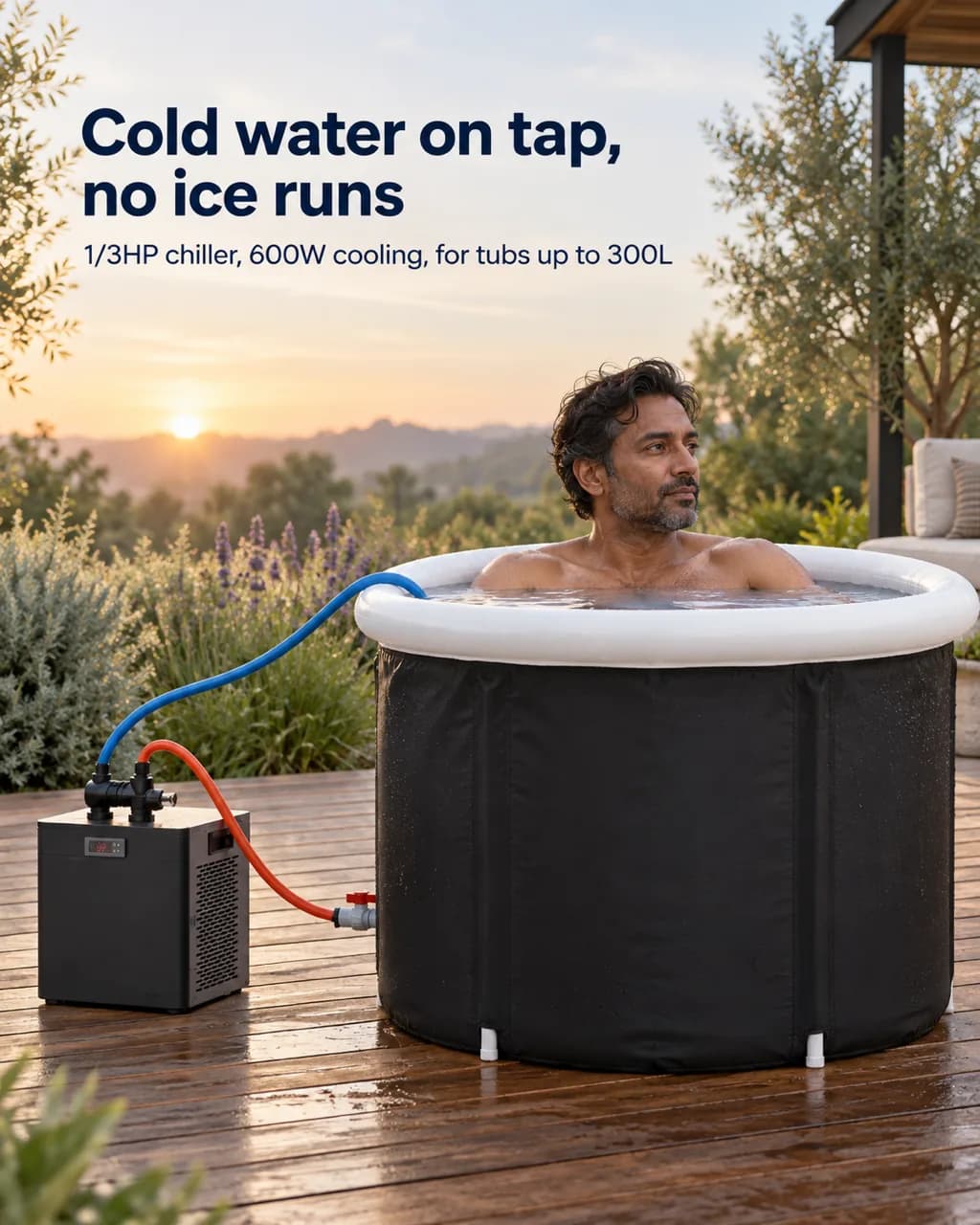
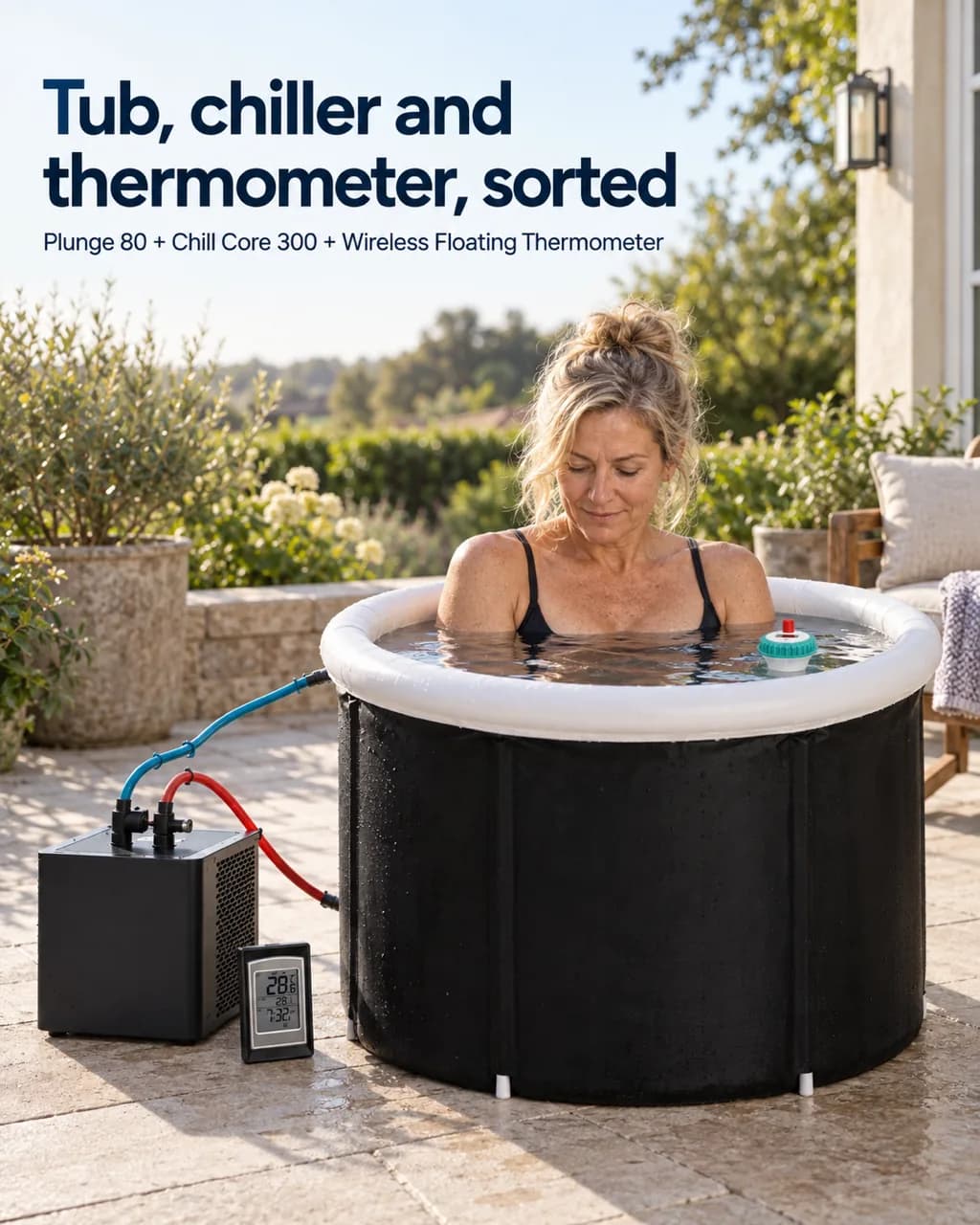
A chiller such as the Chill Core 500 lets you set a consistent, repeatable temperature, which makes it easier to plan cold plunges around training rather than defaulting to straight-after-every-session habits.
A note on study size
The 2024 review's pooled result rests on a total of 8 studies that met inclusion criteria, a small number for a meta-analysis. That is worth keeping in mind: it supports being thoughtful about timing, rather than treating the finding as a reason to avoid cold water immersion altogether.
Safety basics still apply
Whatever your training goal, the same safety guidance applies to any cold water immersion session: beginners should start around 10 to 15°C for 2 to 5 minutes, never immerse alone, and anyone who is pregnant or has a heart condition, high blood pressure or Raynaud's should speak to a doctor before starting. For a full walkthrough of timing and temperature for general use, see our guides to cold plunge temperature and how long to stay in an ice bath.
For the wider picture on cold water immersion and muscle soreness or perceived recovery, a related but different question from long-term hypertrophy adaptation, see cold water immersion and muscle recovery. If you combine cold plunging with a sauna, our guide to contrast therapy covers sequencing for that routine too, and our beginner cold plunge routine covers getting started safely either way.
References
- 1.Throwing cold water on muscle growth: A systematic review with meta-analysis of the effects of post-exercise cold water immersion on resistance training-induced hypertrophy
- 2.Cold water immersion attenuates anabolic signaling and skeletal muscle fiber hypertrophy, but not strength gain, following whole-body resistance training
This article is for general information and does not constitute medical advice. Cold water immersion is not a medical treatment. Consult a professional if you have cardiovascular conditions.
Frequently asked questions
Does cold water immersion completely stop muscle growth from resistance training?
No. The 2024 systematic review found that resistance training still produced muscle growth with or without cold water immersion afterwards. Its pooled conclusion, stated in the review, is that [in conclusion, the current data suggest that the application of CWI immediately following bouts of RT may attenuate hypertrophic changes](https://sportrxiv.org/index.php/server/preprint/view/301), meaning a smaller effect over time, not the absence of one.
Does cold water immersion affect strength gains the same way it affects muscle size?
Not necessarily. One controlled study found that [CWI blunted resistance training-induced muscle fiber hypertrophy, but not maximal strength, potentially via reduced skeletal muscle protein anabolism and increased catabolism](https://ro.ecu.edu.au/ecuworkspost2013/7220/). In that research, the effect on muscle size and the effect on strength were different.
Should I avoid cold plunging after every lifting session?
If muscle size is your main goal, the evidence above points towards keeping cold water immersion away from the hours right after a resistance session rather than making it routine on lifting days. On non-lifting days, or when your goal is strength rather than size, this specific trade-off has not been shown in the same way.
Is this research the final word on cold plunging and muscle growth?
No. The 2024 review's conclusion is based on a pool of 8 trials, a small number for a meta-analysis, so it is best treated as the current evidence rather than a settled conclusion. It supports being thoughtful about timing rather than avoiding cold water immersion altogether.
Is it safe to combine resistance training with regular cold water immersion?
For most healthy adults, yes, if you follow basic safety guidance: start around 10 to 15 degrees C for 2 to 5 minutes as a beginner, never immerse alone, and speak to a doctor first if you are pregnant or have a heart condition, high blood pressure or Raynaud's.
Gear for this




Related reading
Cold water immersion and muscle recovery: what the research shows
The Cochrane review is the anchor for soreness reduction, but there's an important caveat if your goal is building muscle rather than recovering from endurance work.
Cold plunge temperature guide: what the science supports
How cold is cold enough, how long should you stay in, and does colder always mean better? A practical guide grounded in the immersion research.
How to build a cold plunge routine: a beginner's protocol
Where to start, how fast to progress, and how to fit cold plunging around training without undoing your gains. A week-by-week protocol grounded in the evidence.
How long should you stay in an ice bath?
The research clusters around a specific time window, not 'as long as you can stand it.' Here's what the meta-analysis found, and how to build up to it safely.
Contrast therapy: combining sauna and cold the right way
How hot-cold cycling actually works, what order to do it in, and the cardiovascular precautions that matter more than the protocol itself.
Are ice baths good for you? What the research actually says
A clear-eyed look at the evidence behind cold water immersion - muscle soreness, mood, sleep, and where the science is still thin.