Loading…
Science
Is cold plunge good for women? What the research shows
11 min read
Is cold plunge good for women? For most healthy women, the honest answer is that it's about as good, and about as risky, as it is for men. The research on how women respond to cold shows real differences in how the body holds and makes heat, but those differences are smaller than social media suggests, and none of them make cold water off-limits. Where the evidence is thin is on the women-specific claims: hormones, periods, menopause, fertility. We'll go through each one and say how strong the evidence is.
We sell a tub for this, the Plunge 320 at £109, so read our view with that in mind. We've tried to only say what the studies actually tested.
Is cold plunging good for women, in short?
Cold plunging is neither especially good nor especially bad for women compared with men. The strongest evidence for any benefit (a small drop in muscle soreness after hard exercise) comes from mixed studies and applies to both sexes. Women-specific benefits, such as easier periods or fewer hot flushes, rest mainly on a self-reported survey of cold water swimmers. And the scary claims about cold harming female hormones mostly trace back to animal studies that don't translate to a few minutes in a tub. If you're pregnant, have a heart condition or have Raynaud's, ask your GP or midwife first.
For the general benefits and risks, which apply to everyone, see our page on whether ice baths are good for you. This page sticks to what's different for women.
How women's bodies respond to cold
Body size and body fat
The clearest difference is physical. Kaciuba-Uscilko and Grucza's 2001 review of sex differences in thermoregulation points out that women usually have a larger ratio of body surface to body mass and more fat under the skin. More surface per kilo means more area to lose heat from. More fat under the skin means more insulation. Those two pull in opposite directions, which is part of why the overall picture is muddier than "women feel the cold more."
Holding heat vs making heat
The best direct comparison we found is Solianik and colleagues (2014). They put 18 men and 14 women in water at 14°C up to the breastbone and kept them there until their core temperature fell to 35.5°C or 170 minutes had passed. That's far longer than anyone sits in a home plunge, so read it as a lab stress test, not a routine.
The results were interesting. Core temperature fell at the same rate in both groups. The women relied more on insulation (narrowing blood vessels in the skin and holding heat in), while the men produced more heat by shivering and burning more energy. The men also showed bigger jumps in adrenaline and in one marker of inflammation. So the two groups got to the same place by different routes.
Once you account for size
Greenfield, Charkoudian and Alba's 2021 review of ovarian hormones and cold pulls the research together. Their conclusion is worth quoting almost directly: once differences in body size and shape are taken out, the differences between the sexes in handling cold are minimal, and women don't have a strong advantage or disadvantage in tolerating it. They also say plainly that women's responses to cold are understudied and many mechanisms aren't worked out yet.
That's the honest summary of the science. There are differences. They are modest. And nobody has studied them properly in women doing short, repeated plunges at home.
The menstrual cycle and cold water
This is where most of the online advice lives, and where the evidence is thinnest.
What is established: oestrogen and progesterone change how the body regulates temperature. Greenfield's review says oestrogens tend to help the body lose heat and run a little cooler, while progesterone tends to raise body temperature, and that the swing between them across the cycle can move the temperature the body is trying to hold. Kaciuba-Uscilko and Grucza say the same thing in older terms: resting body temperature and responses to heat and cold vary with the phase of the cycle, and also change with the pill, menopause and HRT.
What that means in practice is fairly simple. The same 12°C tub may feel harder on some days of your cycle than others, and that's physiology, not you getting weaker.
What isn't established: that you should avoid plunging in a particular phase, that plunging will regulate your cycle, or that it will disrupt it. We didn't find a controlled trial that tested any of those in women using cold tubs, and we won't pretend otherwise.
Cold plunge benefits for women, graded
Here's how we'd grade the claims you'll see, from strongest to weakest.
Less muscle soreness after exercise: moderate evidence, applies to everyone. Machado and colleagues' 2016 meta-analysis found cold water immersion was slightly better than passive rest for soreness, with a dose-response: the best results came at 11 to 15°C for 11 to 15 minutes. Those trials weren't about women specifically, and "slightly better" is the right phrase.
Mood and alertness straight after: some evidence, applies to everyone. Lots of people feel sharper after a cold plunge, and there's measured physiology behind it. We cover that in our page on cold water therapy and mood.
Easier periods and perimenopause symptoms: early, self-reported evidence. This is the most interesting women-specific research, and it's from the UK. Pound and colleagues (2024) surveyed 1,114 women who swim in cold water. Among those reporting period symptoms, many said swimming reduced anxiety (46.7%), mood swings (37.7%) and irritability (37.6%). Perimenopausal women reported improvements in anxiety (46.9%), mood swings (34.5%), low mood (31.1%) and hot flushes (30.3%).
Now the caveats, because they matter. It's a survey of people who already love cold water swimming, recruited largely through social media and cold water swimming groups. There was no comparison group. It's about swimming in the sea and lakes, usually with friends, not sitting in a tub on your own. The same team's second paper found most of these women swim in the sea and only 15.5% swim alone, so exercise and company are tangled up with the cold. The authors themselves suggest other forms of exercise might show similar effects, and one author declared paid talks on menopause. So: a genuinely useful lead, not proof that a cold plunge eases hot flushes.
Fat loss, hormone balancing, fertility: no good evidence. We found nothing we'd put on this page.
If you're in perimenopause or menopause
This is the group we hear from most, usually about hot flushes. The Pound survey is the only direct evidence we know of, and it's encouraging in a limited way: around three in ten perimenopausal swimmers said their hot flushes improved, and nearly half said their anxiety did. The women also said a lot of the benefit came from the calm of the water and the company of other swimmers, which a tub in the garden can only partly copy.
Kaciuba-Uscilko and Grucza's review notes that thermoregulation changes around the menopause and with HRT, so how cold water feels to you now may differ from how it felt ten years ago. That's worth knowing, not worrying about. Start at the warm end, keep sessions short, and treat any effect on symptoms as a personal experiment rather than a treatment. If hot flushes or low mood are affecting your life, your GP is the right first stop, and a cold plunge can sit alongside whatever they suggest rather than replacing it.
What about the claims that cold is bad for women?
You'll see articles warning that cold water harms female hormones or fertility. One of the pages that ranks for this topic is a 2025 paper by Sun and colleagues titled "Effects of cold environment exposure on female reproductive health." It's worth knowing what it actually is: a study in female mice, repeatedly put in cold water, which found inflammation in the ovaries and uterus and changes in hormone levels. That's a reason for more research. It isn't evidence about a woman sitting in a 12°C tub for three minutes twice a week, and we'd be misleading you if we suggested it was.
A more measured version of the "go gentler" argument comes from Stacy Sims, an exercise physiologist who writes about women and training. Her view is that women don't need to go ice-cold and that around 15°C is a better target, with short immersions. That's an informed opinion rather than a trial result, and it lines up with sensible beginner advice for anyone. The soreness research clustered at 11 to 15°C anyway, so there's no strong reason to chase water colder than that.
Pregnancy, heart conditions and Raynaud's: ask first
Pregnancy. We haven't found research on cold plunging in pregnancy that we'd rely on. The first minute in cold water sends heart rate and blood pressure up. Ask your midwife or GP before you start, and follow what they say.
Heart conditions and high blood pressure. Cleveland Clinic's advice is that cold water constricts blood vessels, raises blood pressure and makes the heart work harder, which can be dangerous for people with heart conditions or high blood pressure. Speak to your GP first.
Raynaud's. The NHS describes Raynaud's as blood not flowing properly to the fingers and toes when you're cold, anxious or stressed, and its self-help advice includes trying to avoid sudden changes in temperature. A cold plunge is exactly that. Ask your GP before trying it.
Anything else you're unsure about, including medication, recent illness or an eating disorder: same answer. Ask your GP.
How we'd start, if you're a woman new to this
The starting advice is the same as for anyone, which is itself the main finding of this page.
- Start around 15°C. Cleveland Clinic suggests 10 to 15°C as a safe range for beginners and says not to go below 4°C. Starting at the warm end of that range costs you nothing.
- Keep the first sessions to a minute or two. Cleveland Clinic suggests beginners limit sessions to a minute or two. Build up slowly from there; our beginner routine sets out a week-by-week plan.
- Once or twice a week to begin. Again, Cleveland Clinic's suggestion for beginners.
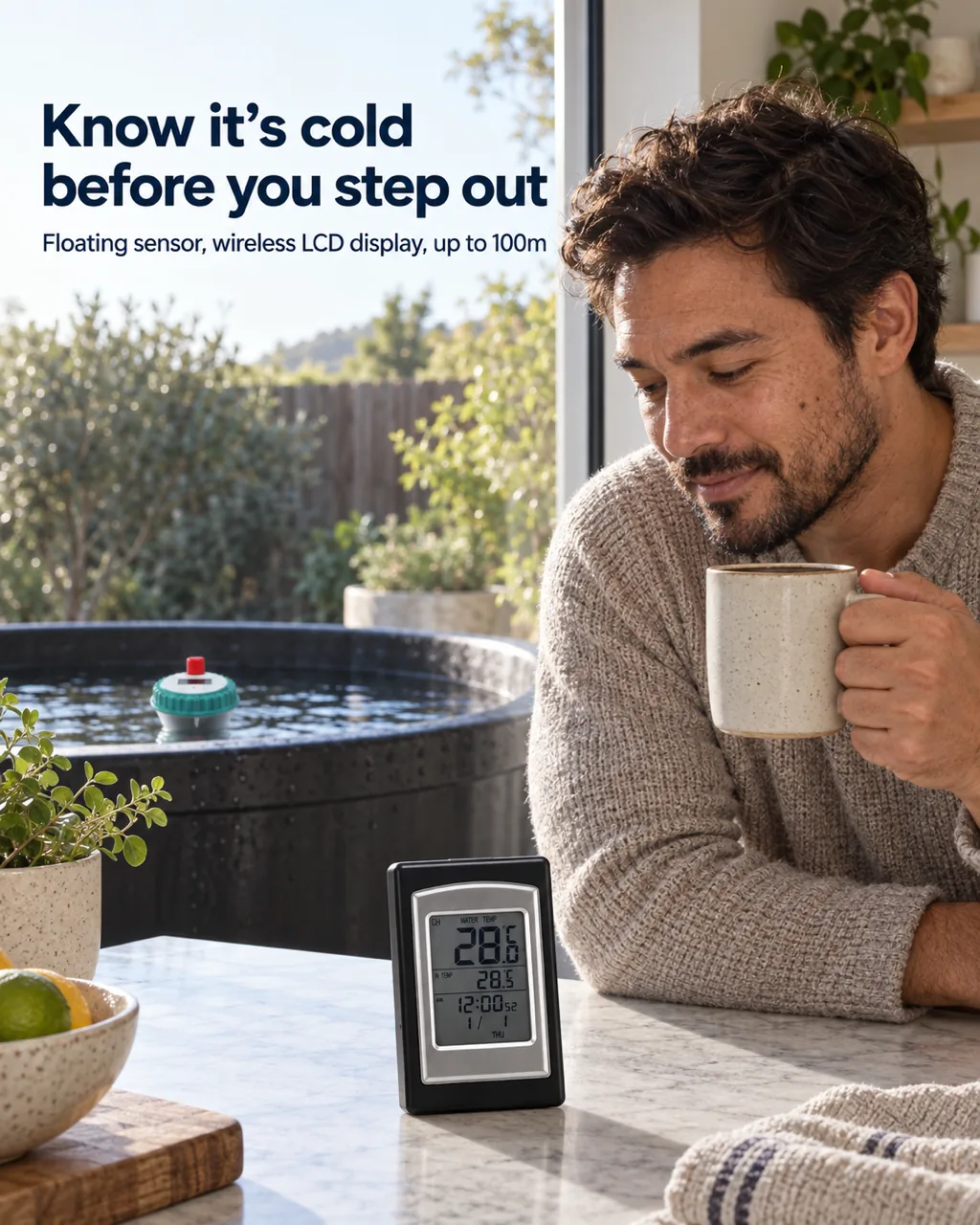
- Measure the water. Guessing is how people end up in 6°C water on day one. A Wireless Floating Thermometer is £29 and shows the water temperature on a display indoors.
- Notice your cycle, if you want to. If some weeks feel harder, shorten the session those weeks. There's no rule you need to follow.
- Never alone, and get out if you feel faint, dizzy or unwell.
Our cold plunge temperature guide goes deeper on picking a temperature.
Why we'd point you to the Plunge 320
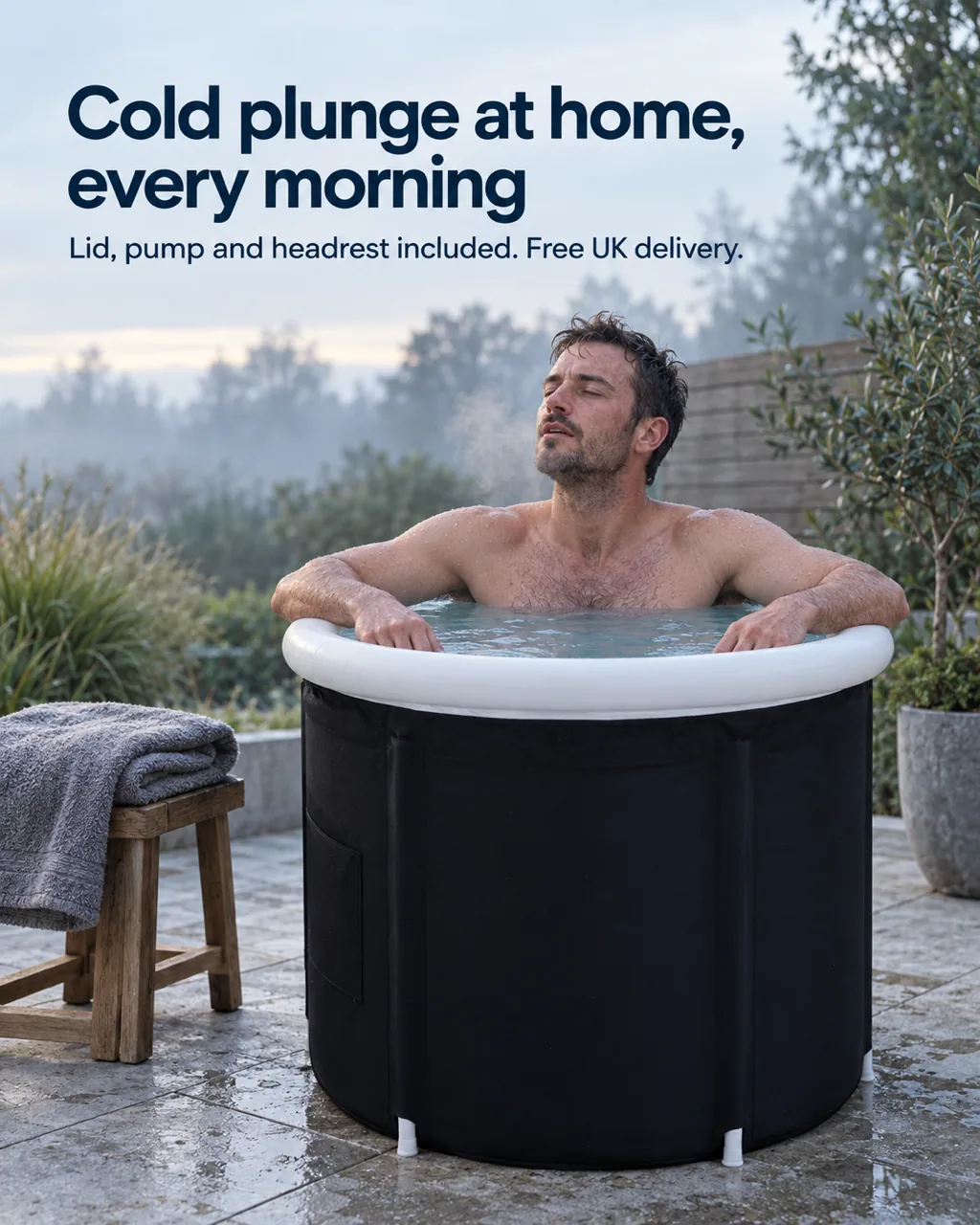
If you decide to do this at home, the tub we'd suggest is the Kaldera Plunge 320 at £109. It's a round sit-in tub, 83cm across and 73cm tall, holding more than 380 litres according to the supplier, with triple-layer insulated walls and an all-weather lid. The inflatable top ring doubles as a headrest, and the box includes a seat cushion, six support legs, a hand pump, a drain hose and a seal ring. Delivery is free.
Two things about it matter for a gentle start. The insulation and lid help the water hold a steady temperature between sessions, so 15°C stays roughly 15°C rather than drifting. And there's no built-in cooling, so you control how cold it gets: tap water in winter, some ice in summer, or a separate chiller later if you want a set temperature every day.
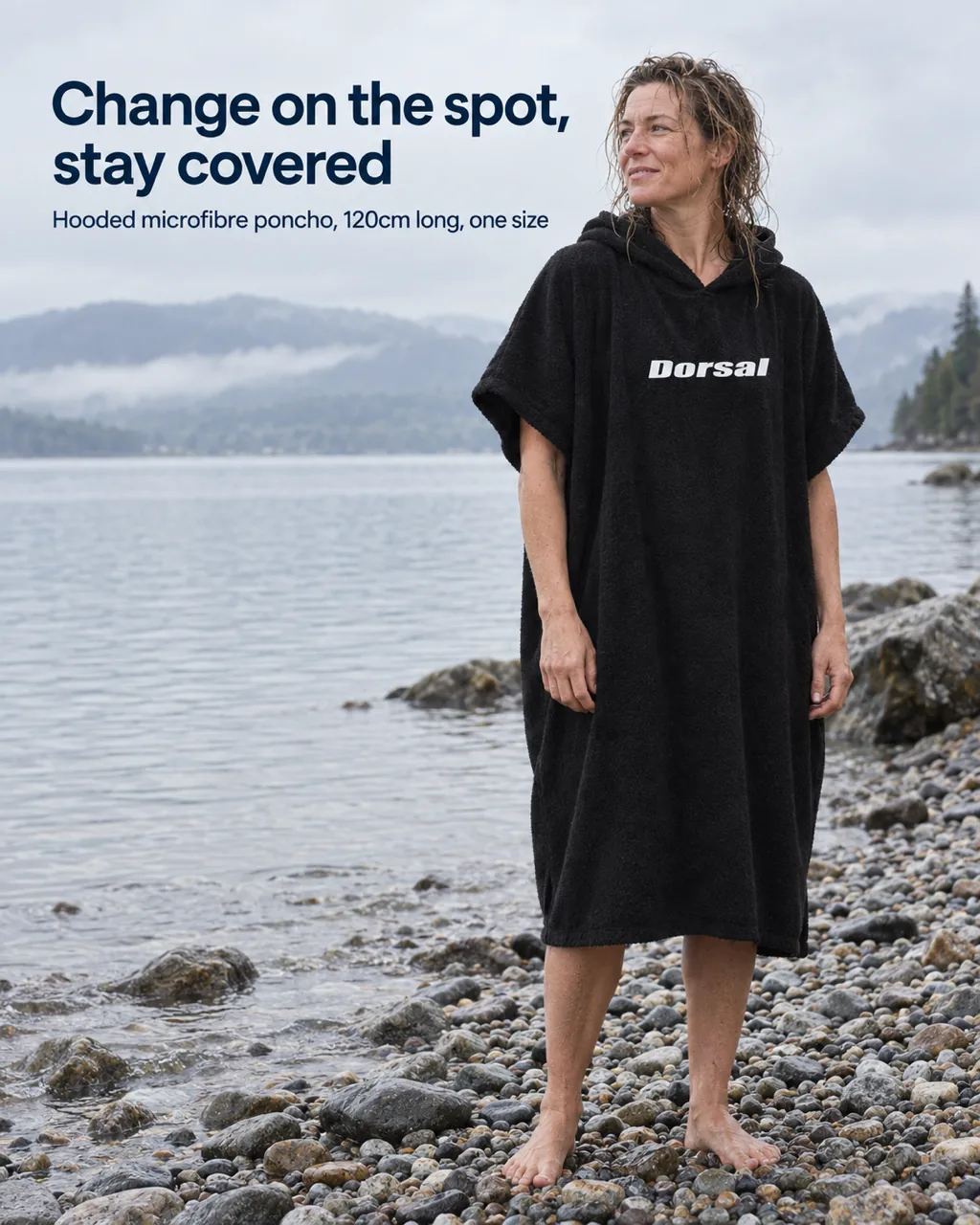
A changing poncho is a nice extra for getting dry and warm quickly afterwards, but not essential.
Who this is not for
If you're pregnant and haven't spoken to your midwife, wait. If you have a heart condition, high blood pressure, Raynaud's or a history of fainting, speak to your GP before buying anything. If you're hoping cold water will fix a hormonal condition, lose weight or improve fertility, we can't point to evidence that it will, and we'd rather you didn't spend £109 on that hope. And if you hate the cold after a few honest tries, that's a fine answer too.
The bottom line
Cold plunging is as reasonable a thing for a healthy woman to try as it is for a man. The differences in how women handle cold are real but small, the women-specific benefits are promising but mostly self-reported, and the worst warnings come from mice. Start at about 15°C, keep it short, measure the water, and ask your GP or midwife if anything on the list above applies to you. If you want a tub for it, the Plunge 320 is the one we'd choose.
This article is for general information and isn't medical advice. Cold water immersion puts real strain on the heart in the first minute. Talk to your GP or midwife first if you're pregnant or have a heart condition, high blood pressure, Raynaud's or any other health concern, never plunge alone, and get out if you feel unwell.
References
- 1.Kaciuba-Uscilko H, Grucza R. (2001). Gender differences in thermoregulation. Current Opinion in Clinical Nutrition and Metabolic Care, 4(6), 533-536.
- 2.Greenfield AM, Charkoudian N, Alba BK. (2021). Influences of ovarian hormones on physiological responses to cold in women. Temperature, 9(1), 23-45.
- 3.Solianik R, Skurvydas A, Vitkauskiene A, Brazaitis M. (2014). Gender-specific cold responses induce a similar body-cooling rate but different neuroendocrine and immune responses. Cryobiology, 69(1), 26-33.
- 4.Pound M, Massey H, Roseneil S, et al. (2024). How do women feel cold water swimming affects their menstrual and perimenopausal symptoms? Post Reproductive Health, 30(1), 11-27.
- 5.Pound M, Massey H, Roseneil S, et al. (2024). The swimming habits of women who cold water swim. Women's Health, 20.
- 6.Sun H, Zhao Q, Liang X, et al. (2025). Effects of cold environment exposure on female reproductive health and its regulatory mechanisms. Frontiers in Genetics, 16, 1570053 (a study in mice).
- 7.Machado AF, Ferreira PH, Micheletti JK, et al. (2016). Can water temperature and immersion time influence the effect of cold water immersion on muscle soreness? A systematic review and meta-analysis. Sports Medicine, 46(4), 503-514.
- 8.Sims S. Cold plunging for women: why colder isn't always better. Checked 30 September 2026.
- 9.Cleveland Clinic. Are 'cold plunge' ice baths good for you? (temperature and time guidance for beginners). Checked 30 September 2026.
- 10.NHS. Raynaud's (symptoms, triggers, try to avoid sudden changes in temperature).
This article is for general information and does not constitute medical advice. Cold water immersion is not a medical treatment. Consult a professional if you have cardiovascular conditions.
Frequently asked questions
Is cold plunging good for women?
For most healthy women, cold plunging carries the same possible upsides and the same risks as it does for men. The research on sex differences shows women tend to lose heat and conserve it in slightly different ways, but once body size is accounted for, a 2021 review found no strong advantage or disadvantage in tolerating cold.
What are the cold plunge benefits for women specifically?
The best evidence is the same as for everyone: slightly less muscle soreness after exercise. The women-specific evidence is a 2024 UK survey of 1,114 cold water swimmers, many of whom said swimming eased period and perimenopause symptoms such as anxiety and hot flushes. That is self-reported, from open water swimming, so treat it as a lead rather than proof.
Should women cold plunge at a warmer temperature?
Some physiologists, including Stacy Sims, suggest women start around 15°C rather than going as cold as possible. There isn't a trial comparing temperatures in women. Starting at about 15°C for a minute or two is sensible for any beginner, and the soreness research clustered around 11 to 15°C anyway.
Can I cold plunge on my period?
Nothing in the research we read says you can't. Hormones across the cycle shift the body temperature your body aims for, so the same water can feel colder on some days than others. Go by how you feel, keep it short, and stop if you feel faint.
Can I cold plunge while pregnant?
Ask your midwife or GP before you do. We haven't found research on cold plunging in pregnancy that we'd rely on, and the cold shock response in the first minute raises heart rate and blood pressure, so it's their call, not ours.
Related products
Related reading
Ice bath benefits: are ice baths good for you? The evidence
Ice bath benefits graded by evidence: what an ice bath does for soreness, stress, sleep and mood, where the research is thin, and who should not get in one.
Ice bath temperature: how cold should a cold plunge be?
The ice bath temperature most studies used is 10 to 15°C (50 to 59°F). How cold an ice bath needs to be, where beginners start, and how much ice it takes.
How to build a cold plunge routine: a beginner's protocol
Where to start, how fast to progress, and how to fit cold plunging around training without undoing your gains. A week-by-week plan grounded in the evidence.
Cold water therapy: what it does to your body and mood
Cold water therapy explained: showers, open water and ice baths, what your body does in the first minutes, and what the research shows on mood and energy.