Loading…
A DIY cold plunge is any container you can sit in that holds cold water: your bath, a new wheelie bin, a steel stock tank, or a chest freezer somebody has sealed and wired up. All four work. They differ a lot in cost, effort and risk, and the cheapest options are usually the ones that don't involve a plug. This page walks through each build with prices we checked on UK sites today, then the safety parts people skip, then an honest comparison with the tubs we sell: the Plunge 80 at £69 and the Plunge 320 at £109.
We'll say it up front, because it's our shop: for a lot of people, the DIY route is the right first step. Sitting in a cold bath for two minutes tells you more about whether you'll keep this up than any product page will.
A DIY cold plunge is worth it if you already own the container or can get one for next to nothing. It's worth less once you start buying parts. A bath and a bag of ice costs a few pounds. A wheelie bin build costs about the same as our cheapest tub. A stock tank or freezer conversion costs several times more than a foldable tub before you've bought a single tube of sealant.
The other thing a DIY build rarely gives you is a lid, insulation and a drain that goes somewhere sensible. Those three things decide whether you use it twice a week for a year or twice in total.
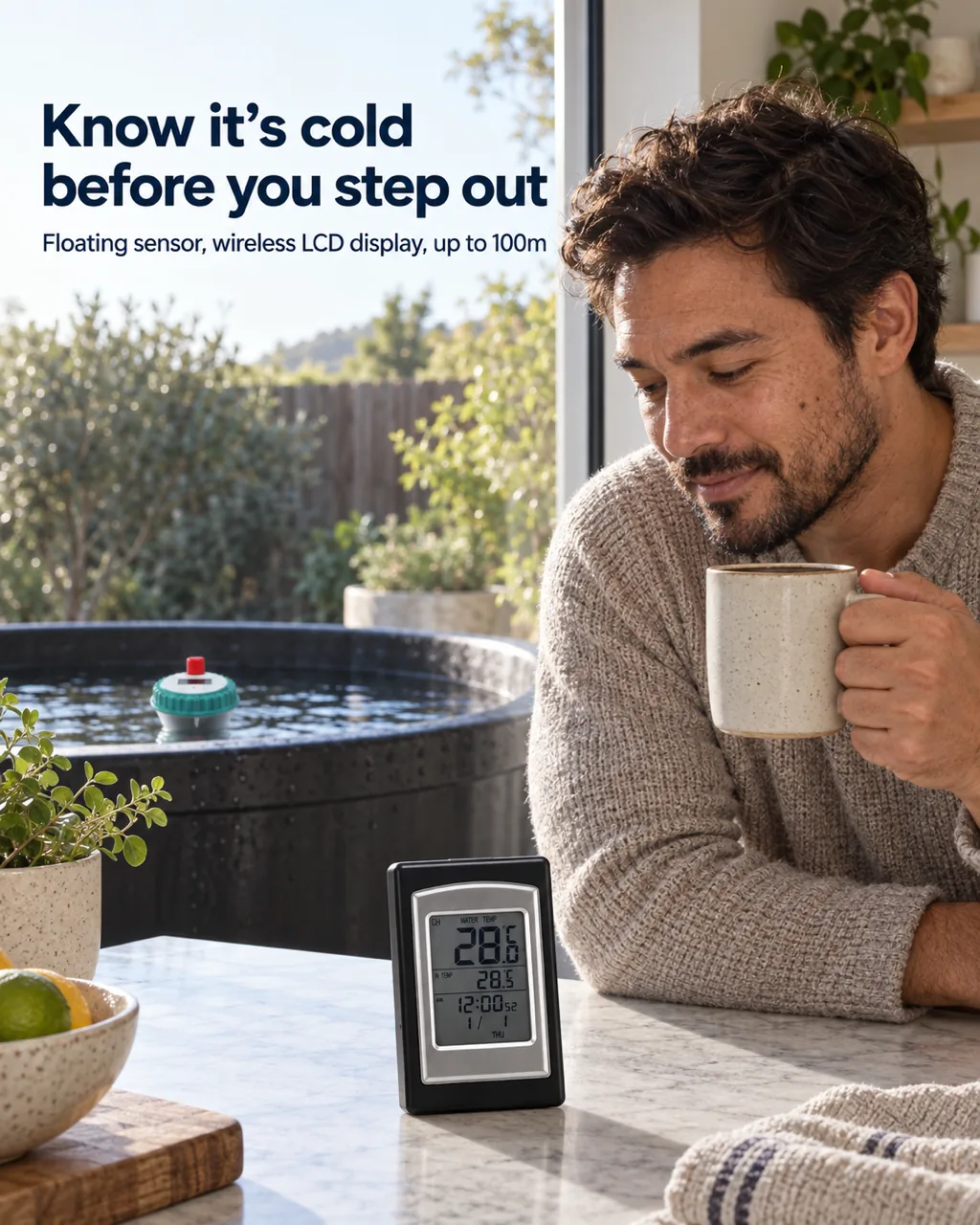
This is where most people should start. Fill the bath from the cold tap, check the temperature with any thermometer you own, and add ice if you want it colder. B&Q had a basic floating water thermometer at £9.95 when we looked, which is plenty for this.
What it's good for: finding out if you like cold water at all, for the price of some ice.
What it's bad at: depth. A household bath is long and shallow, so you lie back rather than sit upright with water at your shoulders. You also drip across the landing afterwards, and nobody else can have a bath while it's full of cold water, so you drain it every time.
Cost: nothing for the bath. Ice is the running cost, and we do the sums further down.
The wheelie bin plunge is a genuine UK thing, and it's popular for a reason: a new 240 litre bin is cheap, tall enough to sit in up to your chest, and it has a lid. On B&Q's site today, 240 litre bins were listed from £52.99 up to £124.99 for heavier-duty ones.
A few things to know before you order one:
Cost: £52.99 and up for the bin, plus ice.
In the US, galvanised stock tanks (the metal troughs farmers use for livestock water) are the classic DIY plunge, and they've arrived in the UK too. B&Q was listing an "Ice Bath 5ft Steel Stock Tank" at £599 and a 6ft extra-wide one at £650 when we checked.
A stock tank lets you sit with your legs out, it's tough, and it'll last outdoors. The downsides: it's big, it's heavy to move even empty, it has no insulation so it warms up on a sunny day, and at that price you're well past what a ready-made foldable tub costs. Many of the builds you'll see online also add a chiller, a pump and a filter, which is where a £599 tank becomes a much bigger project.
Cost: around £599 to £650 for the tank alone at today's listed prices.
This is the build that fills the YouTube and Instructables results. The idea: take a chest freezer, seal the inside so it holds water, add a digital temperature controller so it doesn't freeze solid, fill it and use the freezer's own compressor as a chiller. Mira's guide to DIY cold plunges describes the same steps: seal the interior with waterproof material such as aquarium-safe silicone or pond-safe resin, fit a digital temperature controller, fill it and watch for leaks. It also says, in plain words, to unplug the freezer first.
The price of the freezer is the first surprise. You need one big enough to sit in. On B&Q today, a 380 litre chest freezer was listed at £329.99 and a 291 litre Montpellier at £278. Add the sealant, the controller and an RCD, and you're well into the hundreds.
The second surprise is everything below.
We'll be blunt about the freezer conversion. You are putting your body in water, inside a metal-and-plastic box that runs on mains electricity, and that box was designed to keep frozen peas cold, not to hold 300 litres of water with a person in it. Water gets into places it was never meant to go: behind the liner, into the insulation, near the compressor wiring. You can't see that happening.
The rules we'd give a friend who was going ahead anyway:
The same applies to any DIY build where someone adds a pump, a heater or an aquarium chiller. If it plugs in, it gets the same treatment. The bath, the bin and the plain stock tank with ice have no electrics at all, which is the main reason we'd pick one of those.
A DIY plunge that you drain after each session has almost no hygiene problem. One that you leave full for a week does. The Health and Safety Executive says legionella bacteria grow when water sits between 20 and 45°C, especially when it's stored or recirculated and there's organic matter or biofilm in the system. A cold plunge sitting in the UK sun with no lid, a pump and a slimy hose is not a place you want to test that.
Cheap habits that help: rinse off before you get in, cover it between sessions, drain and wipe it down often, and change the water the moment it looks cloudy or smells. There's much more on this in our ice bath water care guide.
Water weighs a kilogram a litre. A 300 litre build is around 300kg of water before you add yourself. That matters in three ways. Don't try to move anything full. Don't put a full plunge on a balcony, decking or an upstairs floor without checking what the floor can take. And think about where 300 litres goes when you empty it, because a lawn next to the back door will turn into a bog.
The DIY part doesn't change the physiology. The first minute in cold water is the riskiest bit: Barwood and colleagues (2018) describe the cold shock response as a racing heart, narrowing blood vessels, a rise in blood pressure, an involuntary gasp and fast breathing, and their work treats the first minute as the most dangerous period. Get in slowly, keep your head out, and have someone around. If you have a heart condition or high blood pressure, ask your GP before you start. Our step-by-step guide to doing an ice bath at home covers a single session from start to finish.
Whatever you build without a chiller, ice is the running cost. Two textbook figures make the sums easy. Water needs about 4.18 kJ per kilogram to change by one degree, and ice absorbs 333.55 kJ per kilogram as it melts (Wikipedia, enthalpy of fusion), plus a bit more as the melt-water warms. Call it 375 kJ per kilogram all in.
Take 300 litres and drop it by 5°C: 300 × 4.18 × 5 is about 6,270 kJ. Divide by 375 and you need roughly 17kg of ice.
For a price, Parts4tubs' listing for a chiller-equipped ice bath puts bagged ice at £3 to £5 per 10kg bag. On that figure, 17kg is about £5 to £9 of ice for one cool-down. In winter, a UK cold tap may need little or none. In July, with no lid, you'll be topping up every time. Our cold plunge temperature guide covers what temperature is worth aiming for, and it's not as cold as Instagram suggests.
Here's the comparison in plain numbers, all from prices listed today.
The bath. Free to try. Shallow, no lid, drained every time. The best first step there is.
The wheelie bin. From £52.99 on B&Q. Narrow, no drain, awkward to get out of. It saves you about £16 against the Plunge 80, and you get a bin.
The stock tank. About £599 to £650. Tough and roomy, but no insulation or lid unless you add them.
The chest freezer. From about £278 to £329.99 for a freezer big enough, plus sealant, a controller and an RCD. Holds a temperature on its own, which is the one thing the others can't do. Carries an electrical risk the others don't have.
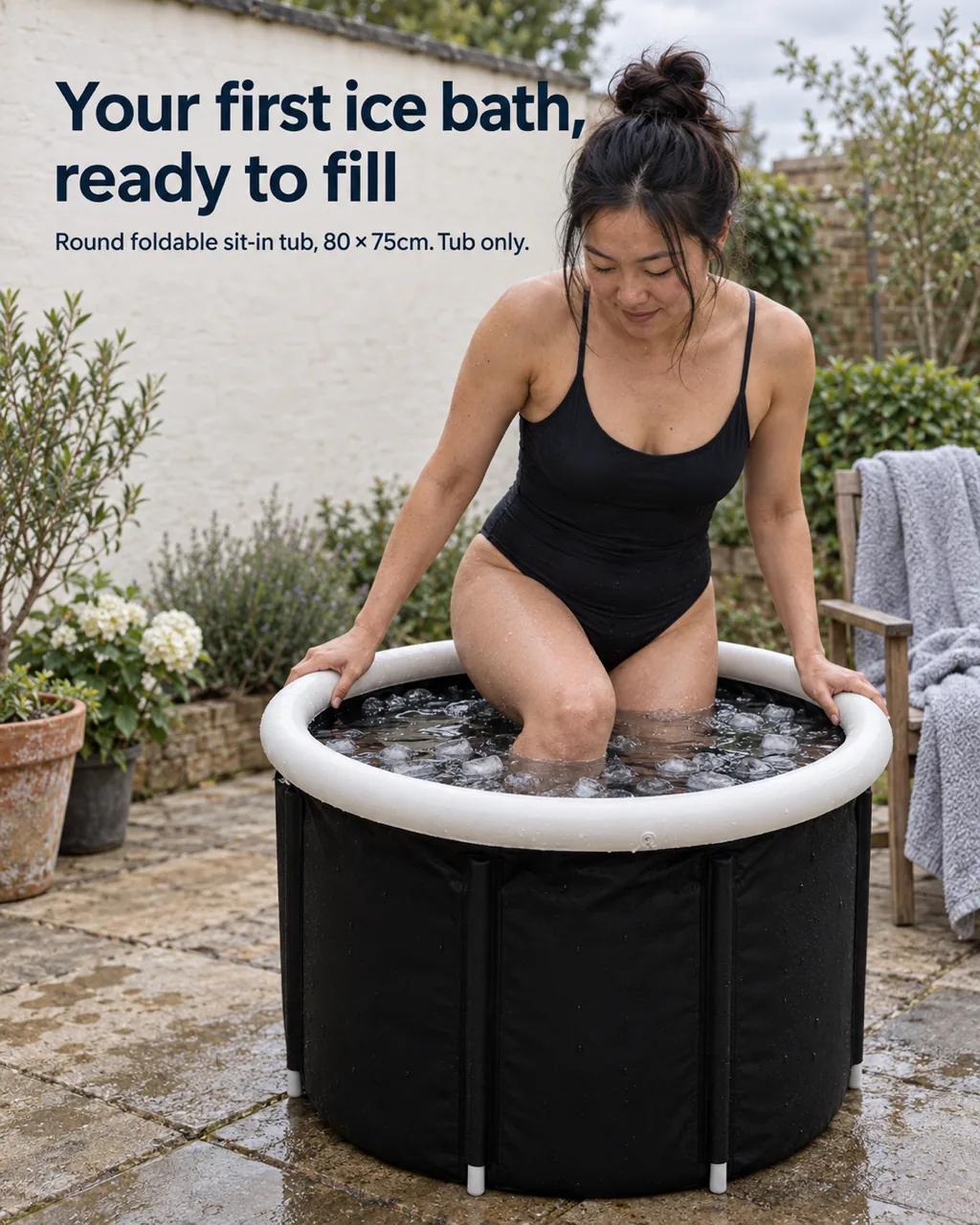
The Plunge 80, £69. A round foldable sit-in tub, 80 × 75cm according to the supplier. Just the tub, no lid or accessories. Orders under £100 carry a flat £4.95 delivery fee. No wiring, no sealant, and it folds away when you're done.
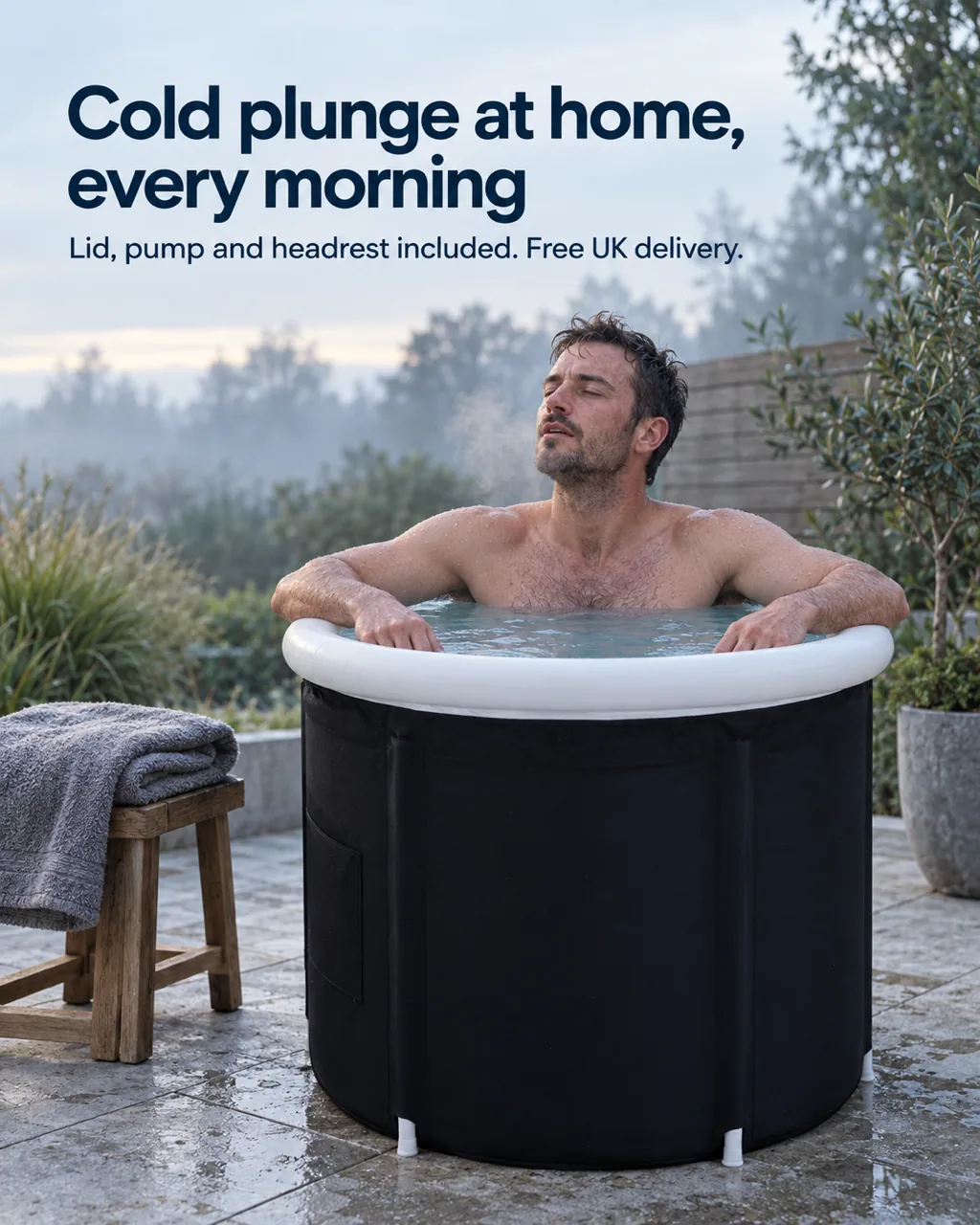
The Plunge 320, £109. 83cm across and 73cm tall, holding more than 380 litres according to the supplier. Triple-layer insulated walls, an all-weather lid, an inflatable headrest ring, six support legs, a seat cushion, a hand pump, a drain hose and a seal ring in the box. Delivery is free because it's over £100.
Neither of our tubs has built-in cooling. You fill them from the tap and use ice, or you add a separate chiller later. That's the honest version: a Kaldera tub is a better container than a bin, with a lid and insulation and a drain hose, but it's still a container. If you want the water held at a set temperature without ice, that's a chiller, and chillers start at £599 in our range.
What we'd do: try the bath first. If you're still at it after three or four weeks, buy a proper tub. If you already own a spare chest freezer and know a qualified electrician, the conversion can make sense, but we wouldn't buy a freezer specifically to do it.
If you have a heart condition, uncontrolled high blood pressure or any history of fainting, don't build anything until you've spoken to your GP, and never plunge alone. If you rent, a stock tank on the landlord's patio or a freezer wired up in their garage is a conversation to have before you order. If you aren't comfortable with electrics, skip the freezer entirely; there's nothing about it that a bath and a bag of ice can't teach you first. And if you're buying most of the parts new, you're paying more than a ready-made tub for something with no lid, no insulation and no warranty. For budget-first buyers, our guide to a cheap ice bath in the UK goes further into what £69 gets you.
Start with your bath. Build a wheelie bin plunge if you want something outside and you're happy crouching. Treat a chest freezer conversion as an electrical project, not a weekend craft. And if the numbers above make a £69 Plunge 80 or a £109 Plunge 320 look sensible, that's because for most people, once you add the parts, they are.
This article is for general information and isn't medical advice. Cold water immersion puts real strain on the heart in the first minute. Talk to your GP first if you have a heart condition, high blood pressure or any other health concern, never plunge alone, and get out if you feel unwell.
This article is for general information and does not constitute medical advice. Cold water immersion is not a medical treatment. Consult a professional if you have cardiovascular conditions.
Your own bath filled from the cold tap. It costs nothing to try, and a bag or two of ice takes it colder. The catch is that a household bath is shallow, so you lie back rather than sit with water at your shoulders, and you can't leave it full between sessions.
Yes, people do. A new 240 litre bin was listed on B&Q from £52.99 when we checked. It works, but it is tall and narrow, you crouch in it with your knees up, and getting out of a slippery bin when you're cold is the part to take seriously. Use a new bin, never one that has held rubbish.
It carries a real electrical risk because you are putting your body in water inside a mains appliance that was never designed to hold water. If you build one, the freezer should be switched off and unplugged before anyone gets in, the socket should be RCD protected, and an electrician should look at it. We wouldn't build one ourselves.
For a basic tub, buying usually wins. The Plunge 80 is £69 and the Plunge 320 is £109 with a lid and insulated walls. A steel stock tank was listed at £599 on B&Q and a large chest freezer at £329.99, before sealant, a controller or an RCD. DIY only saves money if you already own the container.
Roughly 17kg to drop 300 litres of water by 5°C, using textbook figures for melting ice. At the £3 to £5 per 10kg bag quoted on one UK retailer's page, that's about £5 to £9 of ice for one cool-down, and the water starts warming again straight away.
Hunting for the cheapest ice bath in the UK? An honest look at the £69 Plunge 80: what's in the box, what isn't, and when £40 more is the cheaper choice.
Do you need an ice bath filter? What filters exist for home tubs, how often to change the water, and the sanitiser levels UK guidance uses, explained plainly.
How to do an ice bath at home, start to finish: filling, how much ice, checking the temperature, getting in, breathing, how long, warming up and clean-up.
The ice bath temperature most studies used is 10 to 15°C (50 to 59°F). How cold an ice bath needs to be, where beginners start, and how much ice it takes.