Loading…
Guide
Aldi ice bath chiller: what Aldi sells, and how to add one
4 min read
Does Aldi sell an ice bath chiller?
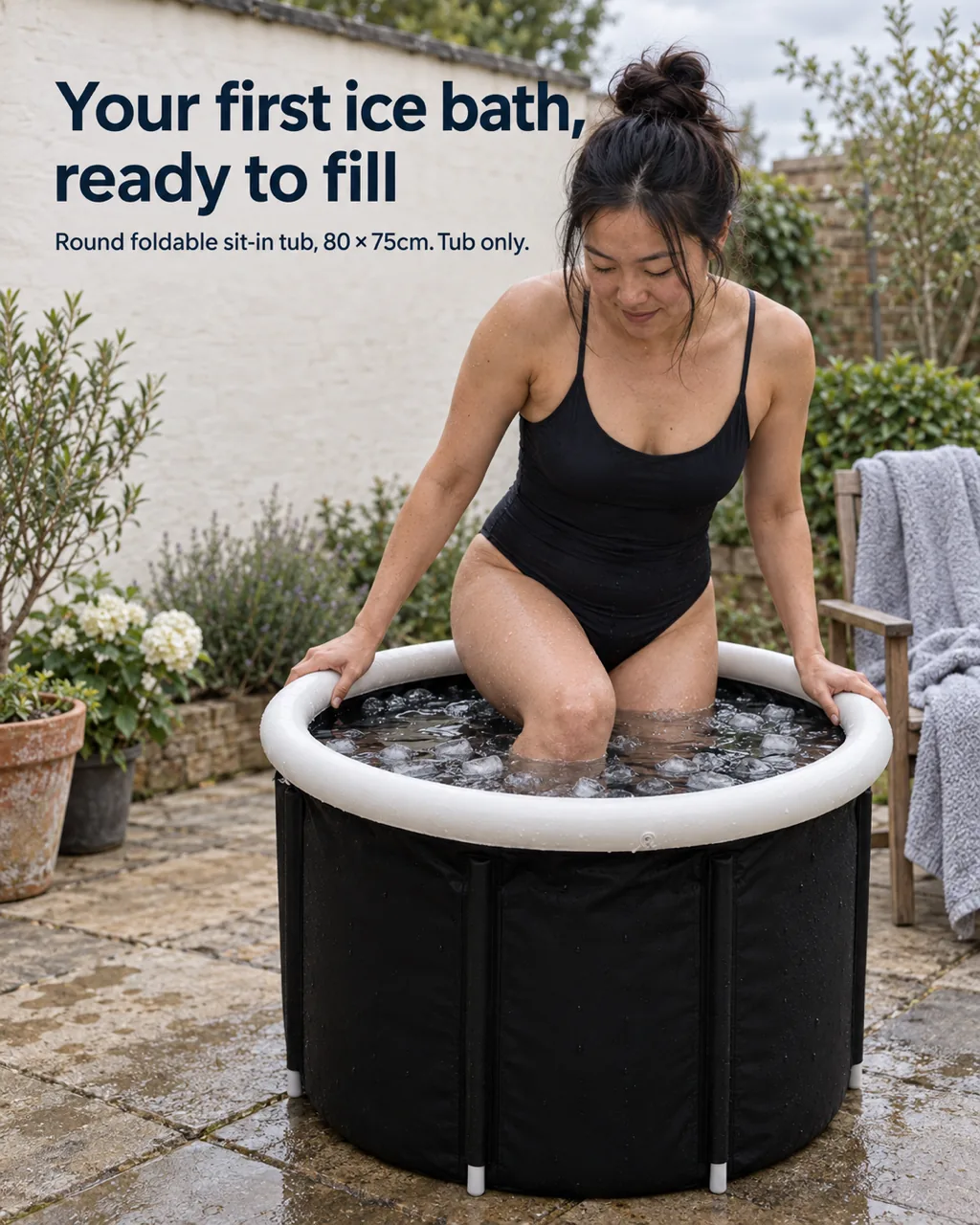
No. Aldi's Specialbuy ice baths are passive tubs you cool with ice, not electric chiller units. Aldi's own announcement for the smaller tub says "Crafted from tough Tritech® puncture-resistant material, Aldi's Ice Bath (£24.99) comes with a secure cover and rope fastener" (Aldi UK Press Office), and separate coverage of the same launch confirms it is "made from durable Tritech® puncture-resistant material, includes a secure cover with rope fastener, and is designed for easy solo use" (Forestry Journal). Neither description mentions a chiller or electric cooling unit.
The step-up Crane Premium version is the same idea at a larger size: "On offer for £149.99, customers can bring home a tub that claims to be big enough for two people to use" (AOL UK). Like the smaller tub, cooling means adding ice, not plugging in a chiller.
If you already own an Aldi tub and want cold water on tap without ice runs, the practical answer is to add a standalone chiller rather than wait for Aldi to sell one.
Matching a chiller to the tub you already have
Our own chillers are rated by the tub volume they can keep cold, not by brand, so sizing is about litres rather than matching an Aldi part number:
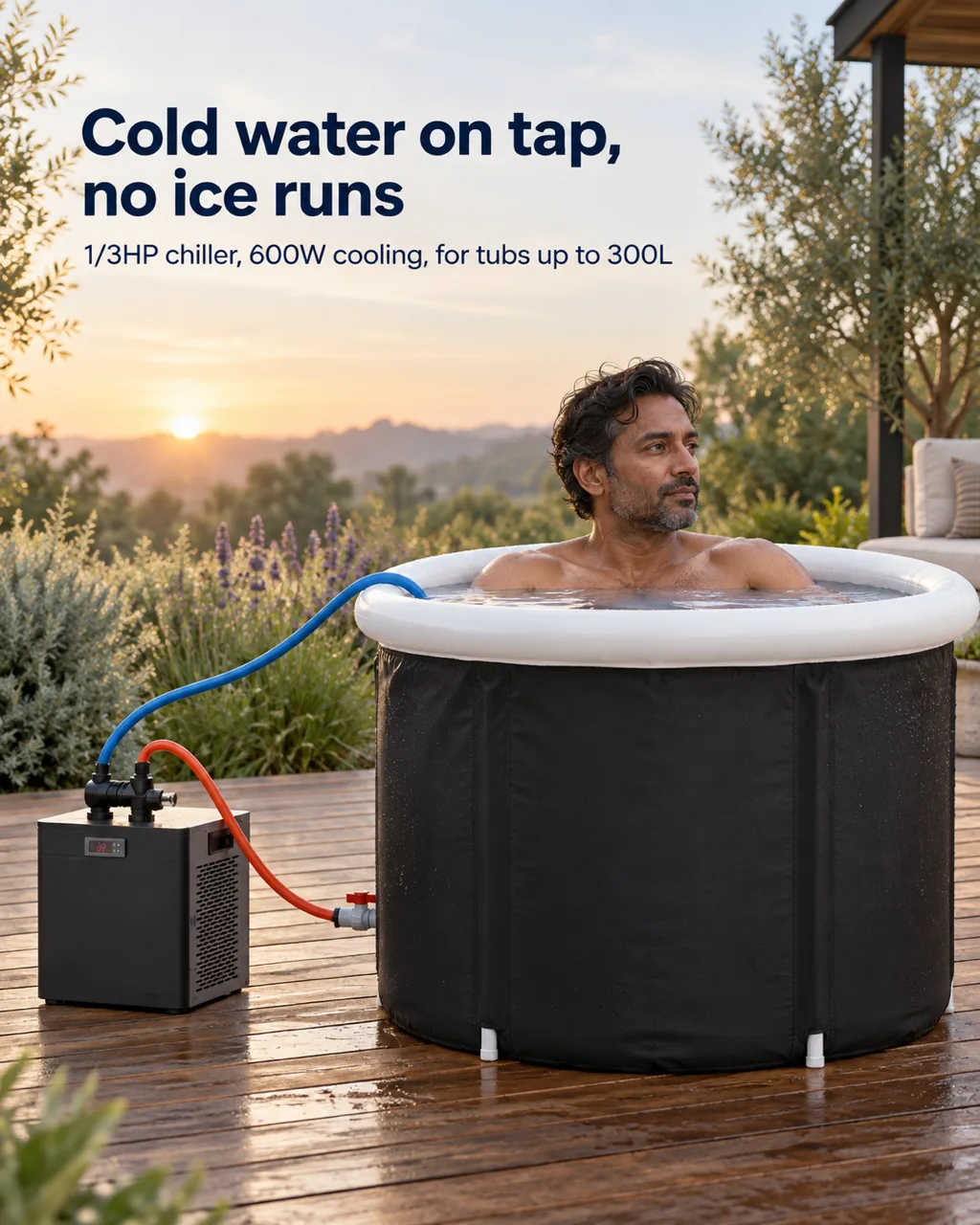
- Chill Core 300 is a 1/3HP unit rated for tubs up to 300L. This comfortably covers Aldi's smaller inflatable tub.
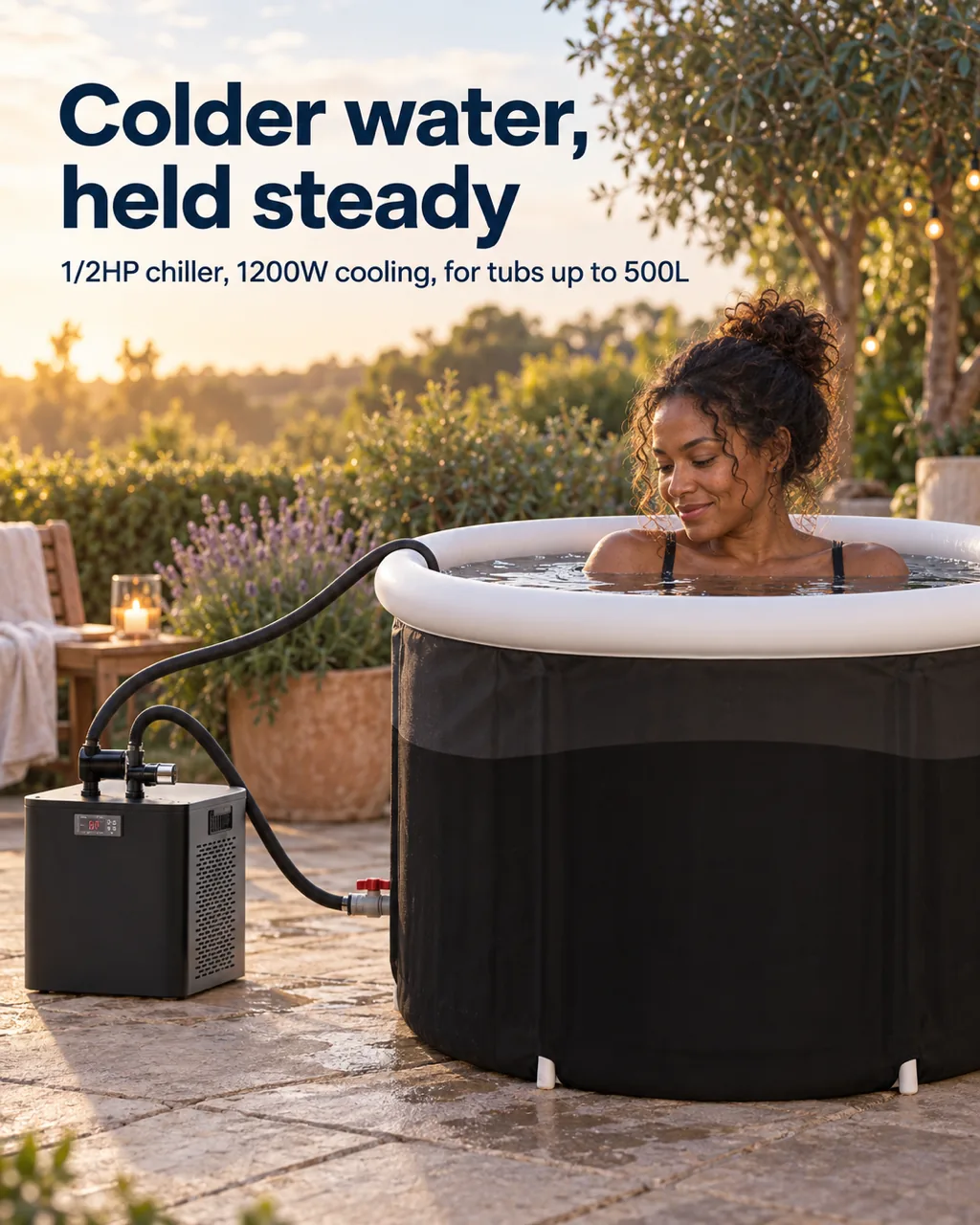
- Chill Core 500 is a 1/2HP unit rated for tubs up to 500L. This is the better match for Aldi's larger, two-person Crane Premium tub, since a bigger water volume needs more cooling capacity.
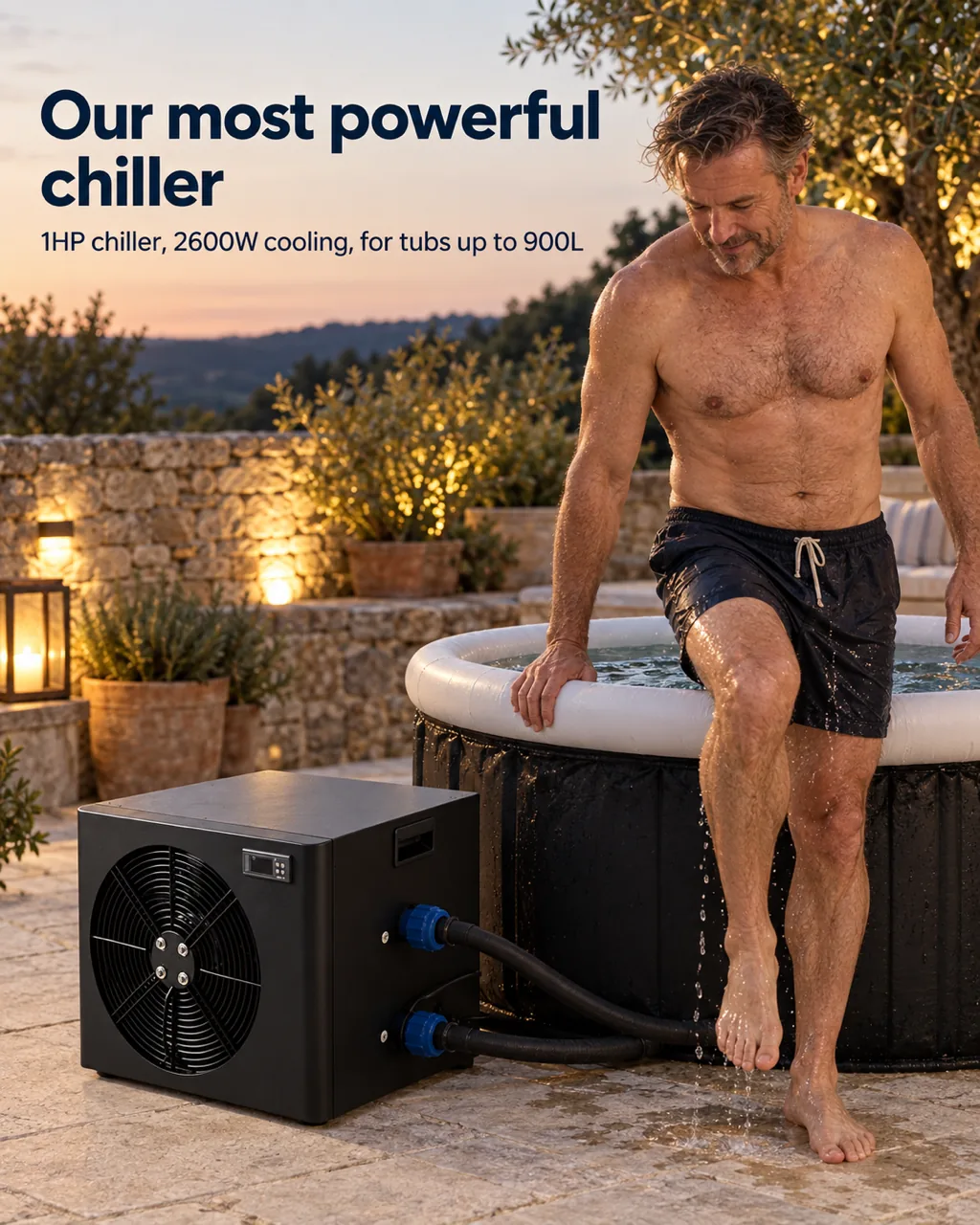
- Chill Core Pro is a 1HP unit rated for tubs up to 900L, useful if you later move up to a larger or insulated tub.
References
This article is for general information and does not constitute medical advice. Cold water immersion is not a medical treatment. Consult a professional if you have cardiovascular conditions.
Frequently asked questions
Does Aldi make an ice bath chiller?
No. Aldi's ice bath tubs are cooled by adding bags of ice, not by an electric chiller. Neither Aldi's own product announcement nor independent coverage of either launch mentions a chiller or cooling unit.
Can I add a Kaldera chiller to an Aldi ice bath tub?
We don't recommend it. Aldi's tubs are inflatable rather than built as chiller-ready, so there is no rigid wall or fitted port to hold a chiller's hoses securely, and a mains-powered chiller should only be paired with a tub its instructions approve. A chiller-ready insulated tub is the safer route.
What size chiller matches Aldi's smaller inflatable ice bath?
The Chill Core 300 is a 1/3HP chiller rated for tubs up to 300L, which comfortably covers Aldi's smaller inflatable tub. For Aldi's larger, two-person Crane Premium tub, the Chill Core 500, a 1/2HP chiller rated up to 500L, is the better match.
Is it cheaper to keep using ice with an Aldi tub, or buy a chiller?
Ice keeps the upfront cost lower but means repeat trips to buy ice and a temperature that drifts as it melts. A chiller costs more upfront and adds running electricity, but holds a steady temperature without ice runs. Which is worth it depends on how often you plan to use the tub.
Related products
Related reading
Aldi ice bath review 2026: the £24.99 tub and Crane Premium
What Aldi has actually said about its 2026 ice baths, the Specialbuy tub and the pricier Crane Premium version: stock timing, what's included, no insulation claim, and when a £69 foldable tub you can order any day is the more practical buy.
Ice bath chillers UK: which chiller for which tub (2026)
A plain UK buying guide to ice bath chillers: how to size a chiller to your tub in litres, what the three Chill Core models do, and how running costs work.
Ice or a chiller: cost, effort and temperature compared
Cooling an ice bath with bags of ice vs running a chiller, side by side: what each costs up front and per session, the effort involved, and the temperature you get.
Do you need a chiller for an ice bath? A straight answer
No, you don't need a chiller for an ice bath. Ice or a cold tap works. Here's when a chiller is worth it, when it isn't, and what ours cost and reach.
How much does an ice bath chiller cost to run in the UK?
How to work out what an ice bath chiller costs to run at the UK electricity price cap: the one rate you need, worked sums per day and month, and what drives it.