Loading…
An outdoor ice bath is the easiest kind to live with. There's a tap nearby, nobody minds if you splash, and the water can go on the garden when you're done. A patio or the space beside the back door is where we'd put one. Getting the spot right at the start saves you the one job nobody wants, which is moving a tub with a third of a tonne of water in it.
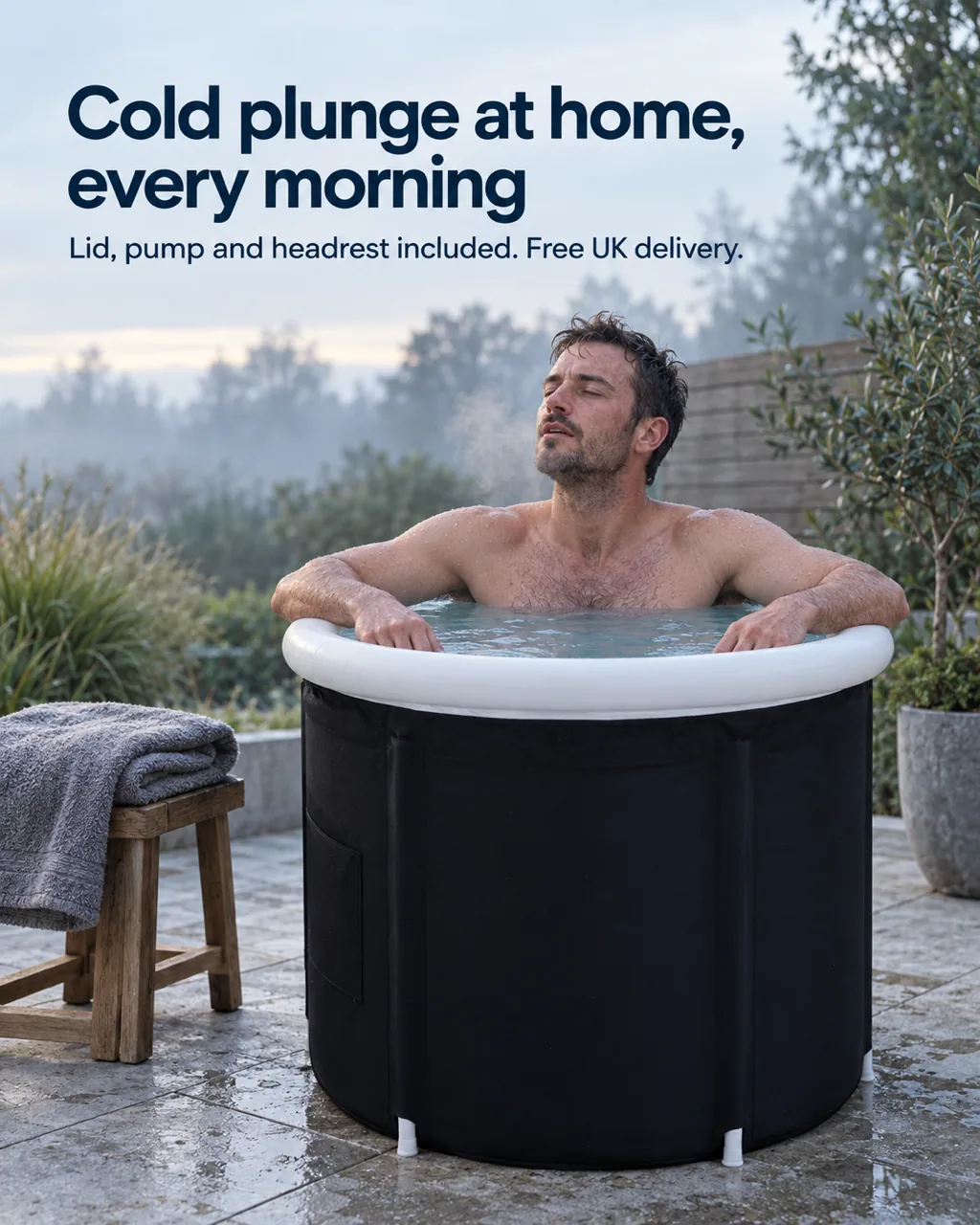
This guide covers where to put a garden ice bath, what it should stand on, how much it weighs, how to keep the water clean and cold outdoors, where to drain it and what to do when there's a frost. The tub we'd use is our Plunge 320 at £109, which works indoors or out and has an all-weather lid in the box.
On a flat, solid surface, in shade, within hose reach of an outside tap, with a drain or a border downhill, and close enough to the back door that you'll still use it in January. If you can only have three of those, choose solid, shaded and near the door.
That's the whole answer. The rest of this page is the reasoning, so you can adapt it to your own garden.
Start here, because it's the one thing you can't fix after filling.
One litre of water has a mass of almost exactly one kilogram (Wikipedia, litre). The Plunge 320 holds more than 380 litres according to its supplier. So a full tub is about 380kg of water, plus the tub, plus you.
All of that sits on a circle 83cm across. By our arithmetic that footprint is a little over half a square metre, which puts the load at roughly 700kg per square metre before you climb in.
To give that number some meaning: the British Standard used for domestic floor joist tables, BS 6399-1, assumes an imposed load of 1.5 kilonewtons per square metre (Timber Beam Calculator). That's about 150kg per square metre. A full tub is pressing down four to five times harder than the everyday load a house floor is designed around.
What that means in the garden:
Paving slabs on a proper base, a concrete pad, a garage floor. All fine. This is where we'd put it.
Block paving and tarmac drives. Generally fine if they take a car.
Lawn. It'll hold, but the grass underneath yellows and dies back, the ground softens with every splash, and a tub that's sinking on one side puts uneven strain on its support legs. Use lawn for a weekend trial. For longer, lay four slabs.
Gravel. Workable if it's well compacted and you put a board or mat under the tub to keep stones from pressing into the base.
Raised timber decking and balconies. This is the one to stop and check. Garden decks are often built light. We can't tell you yours will take 700kg per square metre, and neither can a product listing. Ask the person who built it, or a structural engineer. If in doubt, put the tub on the ground next to the deck.
Level matters as much as strength. On a slope the water sits higher on one side and the tub leans. Put a spirit level on the spot before you fill. Sweep it too: a sharp stone under 380kg is a bad thing to have beneath fabric.
Shade does two jobs. It keeps the water colder, so you use less ice in summer, and it slows algae, which needs light. A north-facing wall, the shadow of a fence or the space under a pergola all work.
Shelter from wind matters in winter. Bestway's advice for its outdoor spas is to position them in a sheltered or covered area to reduce wind chill, rain and snow, and the same logic applies to the person standing next to a tub in a wet towel. A corner between a wall and a fence is ideal.
Avoid putting it directly under trees if you can. You'll be fishing out leaves and seeds daily, even with a lid, and bird droppings are a water-care problem you don't need.
You'll fill the tub from an outside tap, so check the hose reaches without being stretched across a path. A full fill takes a while. Don't wander off and forget it.
If you think you might add a chiller later, leave room beside the tub for it and think about power. A chiller needs a mains supply, and outdoors that means a properly installed weatherproof socket. That's a job for a qualified electrician, and it's worth a conversation before you settle on a spot at the far end of the garden.
This sounds trivial and it's the thing that decides whether you keep going. If getting to the tub means crossing a frosty lawn in view of three neighbours, you'll find reasons not to bother by December.
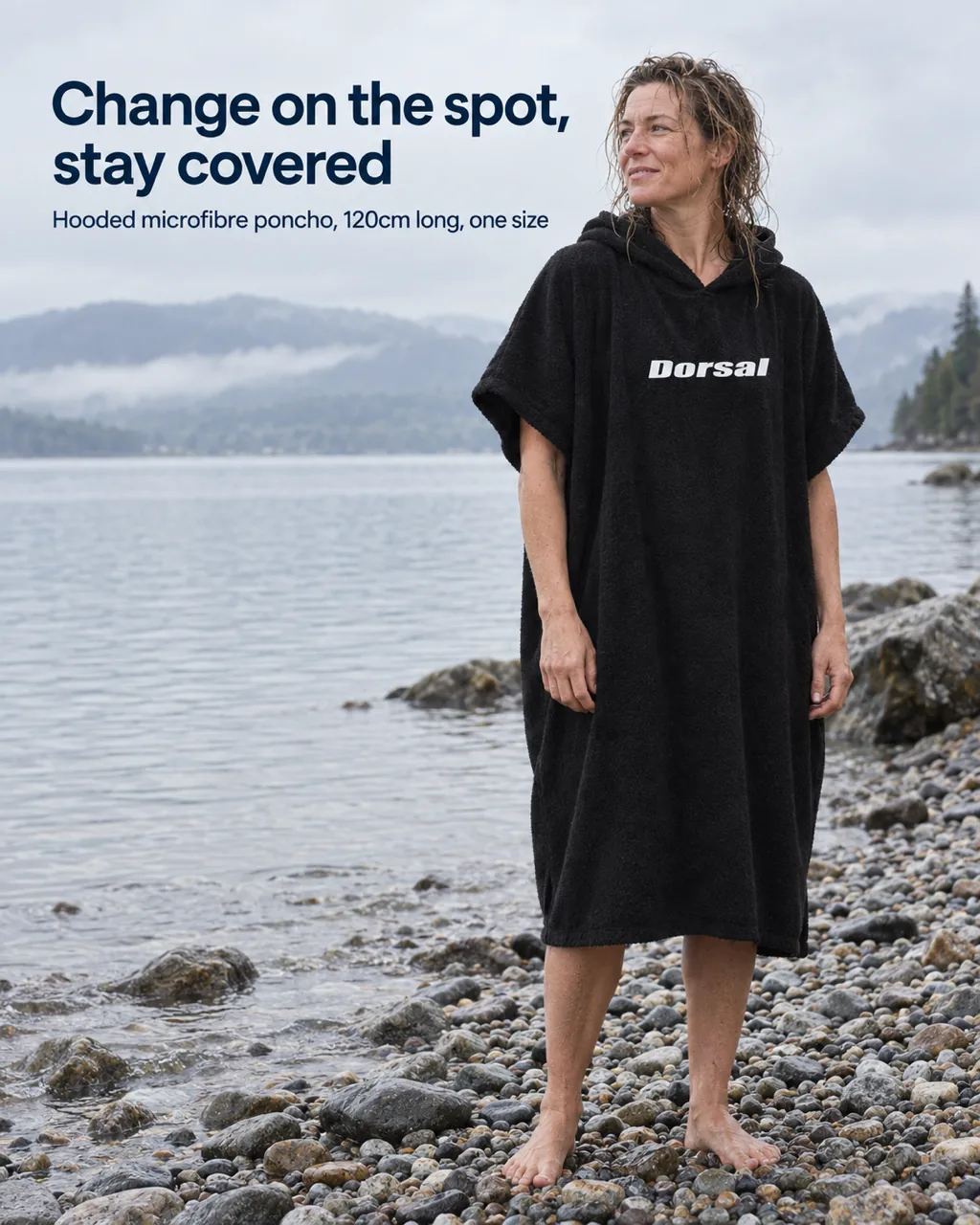
Put it close to the door. Keep a mat next to it so you're not standing on cold stone, and hang something warm within reach. Our Dorsal Microfibre Changing Poncho is £39: a hooded towel poncho, 120cm long, that you pull on and change under. A dressing gown on a hook does the same job.
A light helps in winter, when an early plunge means going out in the dark.
Outdoor water collects things. Leaves, grass cuttings, insects, the occasional slug. The lid is your first defence.
The Plunge 320's lid is elasticated and described by the supplier as all-weather. It keeps debris out between sessions. It's worth being clear about what it isn't: it's not a filter, it's not water treatment, and it's not a safety cover that will hold the weight of a child or a pet. If you have small children or animals, treat a filled tub like a pond and keep it out of their reach or empty.
Rinse your feet before you get in. It sounds fussy, but a lot of the dirt in a garden tub arrives on feet, and clean feet mean fewer water changes.
How often to change the water depends on how you look after it, and that's a subject on its own. Our water care and maintenance guide covers it.
Our own advice on the Plunge 320 product page is to plan where the water will drain before filling, and it's the best single tip for a garden setup. The tub comes with a drain hose.
You have more than 380 litres to get rid of. Your options, in the order we'd pick them:
Things to avoid: draining towards the house wall, draining onto a neighbour's side, and letting it run across a path that might freeze overnight. That last one catches people out in winter.
If you've added any sanitiser or chemical to the water, read its label before you put the water on plants or down a drain.
Water runs downhill, so the hose end needs to be lower than the tub's drain. On a dead flat patio the last few centimetres won't leave on their own. A jug and a sponge finish the job, or you can tip the nearly empty tub.
The research most people lean on used water at 10 to 15°C for 10 to 15 minutes (Machado and colleagues, 2016). Outdoors, the British climate does a lot of that work for you for much of the year, and works against you in July.
Three things keep outdoor water cold for longer. Shade, as above. The lid, because the open top is the largest uninsulated surface. And insulated walls. The Plunge 320 has triple-layer insulated fabric, which the supplier says helps the water hold its temperature for longer. Still air is a poor conductor of heat, at around 0.024 watts per metre-kelvin (Wikipedia, thermal conductivities), and that's the principle insulating layers rely on.
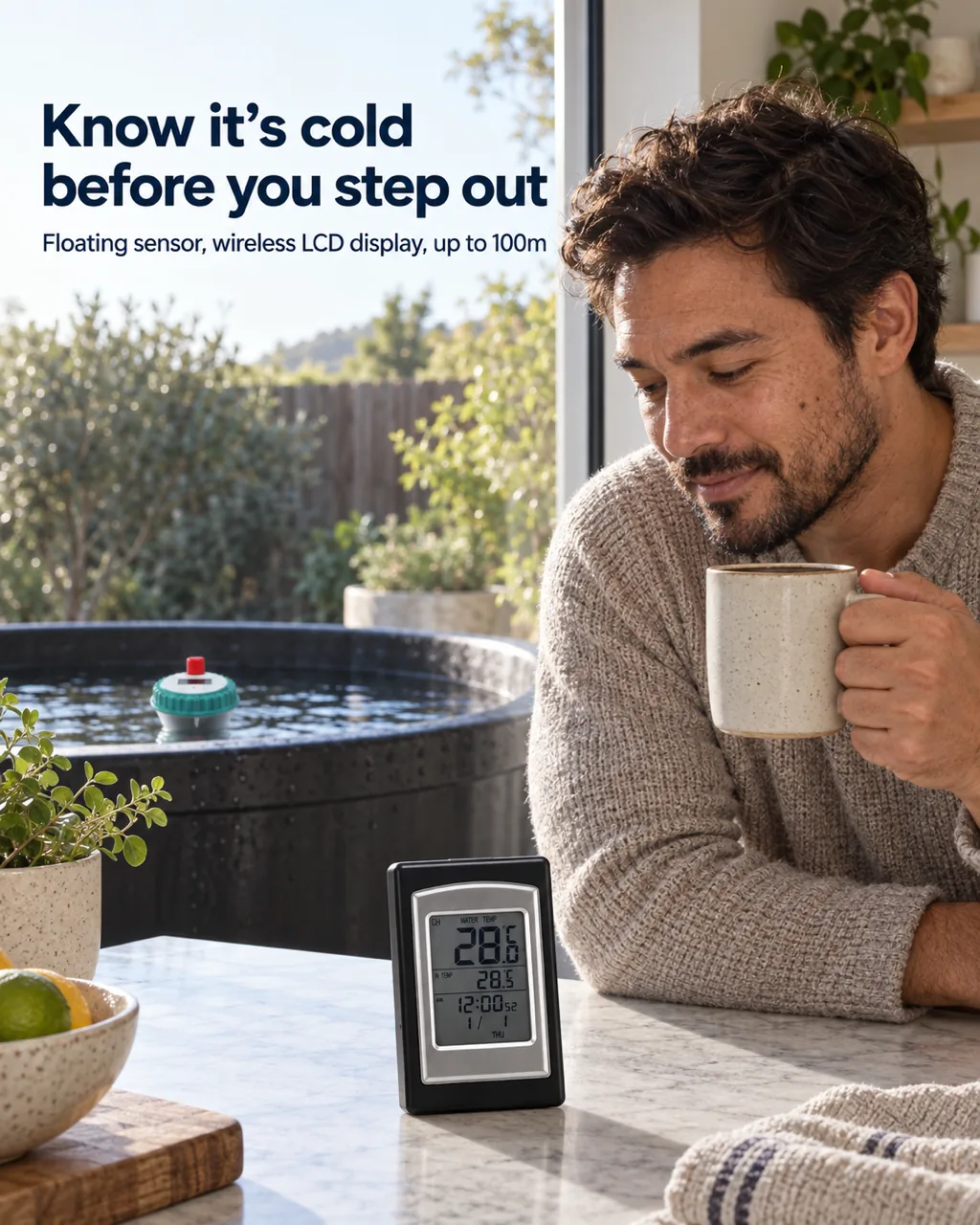
You can't tell the temperature by looking, and outdoors it changes with the weather. Our Wireless Floating Thermometer at £29 has a floating sensor and an indoor display that works up to 100 metres away, so you can read the tub from the kitchen before deciding whether it needs ice, or whether last night's cold snap has taken it lower than you'd like.
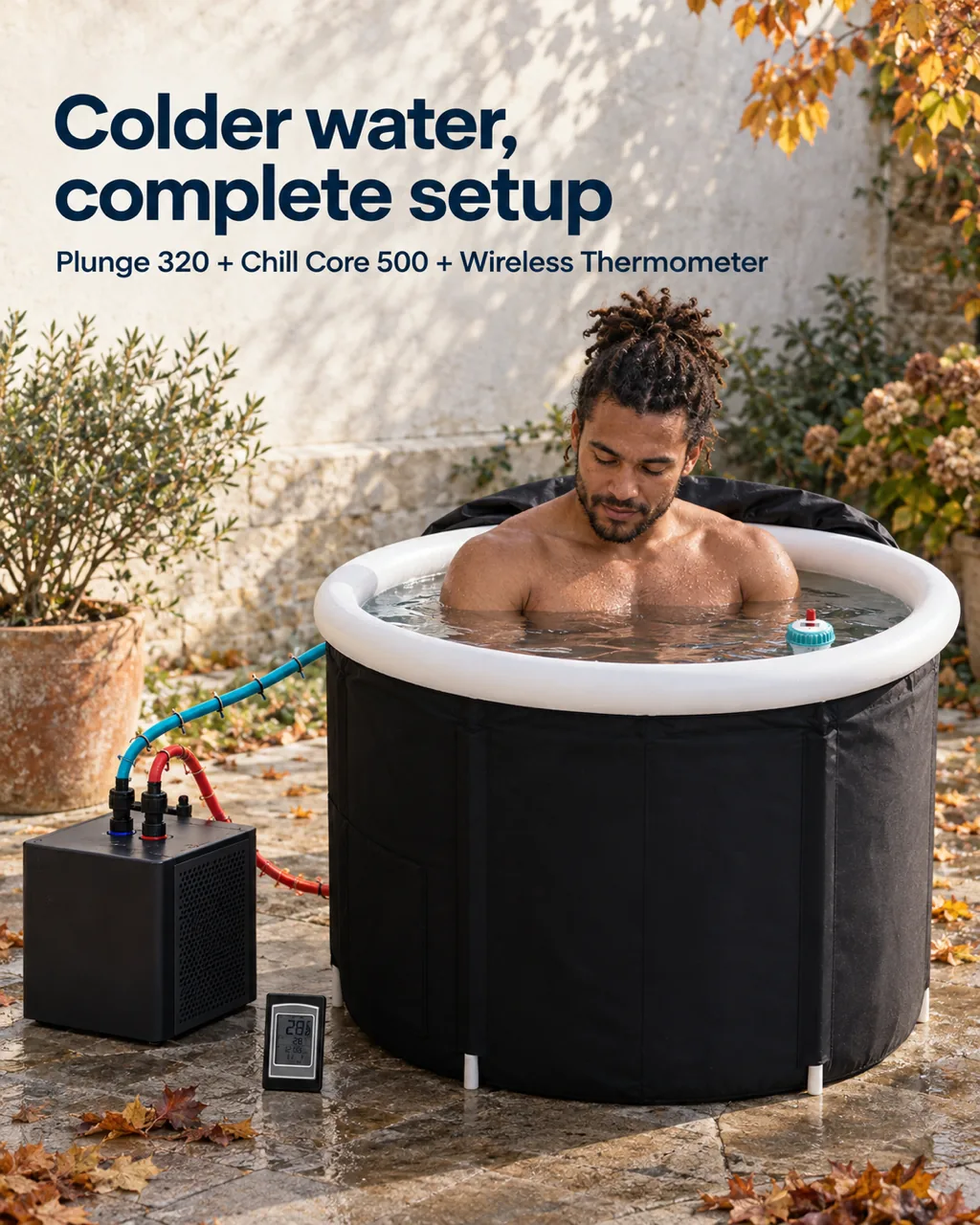
If you want a set temperature all year, that's a chiller. The Performance Bundle at £899 pairs the Plunge 320 with the Chill Core 500, rated by its supplier for up to 500 litres, and the thermometer.
Winter is when a garden ice bath earns its keep. It's also when a few things can go wrong.
Water is densest at about 4°C and expands as it freezes, with its density dropping by about 9% (Wikipedia, properties of water). In a big open tub, that usually just means a skin of ice on top, which you break and lift out. The supplier rates the Plunge 320 for water temperatures from -10 to 50°C. We'd still not leave any fabric tub to freeze solid while full. If a long hard freeze is forecast and you're not using it, drain it.
Pumps and chillers are more vulnerable than tubs. Bestway warns that if temperatures drop below 4°C, water can freeze inside a spa pump and cause serious damage. The same goes for the pipework on any chiller. In freezing weather, either keep it running as its manual says, or drain it and bring it under cover.
Check the temperature before every winter session. Water that was comfortably in range last week can be several degrees colder after two frosty nights, and that's a very different plunge. Shorten your time when it's colder than you're used to.
Then there's you. The British Heart Foundation notes that entering very cold water can cause a cold shock, with a faster heart rate, higher blood pressure and shortness of breath. Outdoors in winter you're also cold before you get in and cold when you get out. Have your towel, poncho and shoes laid out, get dry and dressed straight away, and don't plunge with nobody else at home.
Icy paving is its own hazard. Splashed water freezes. Put down a rubber mat and grit the route to the door.
One advantage of a foldable tub over a wooden or steel one is that the garden can go back to being a garden. If you stop for the summer or go away for a month, drain the tub, wipe it out, let it dry completely in the air, then fold it and store it somewhere it won't be crushed. Fabric folded damp goes musty. The Plunge 320 folds down for storage once it's emptied.
If your only outside space is a balcony or a raised deck you can't get checked, don't put nearly 400kg of water on it. If there's no outside tap and no way to drain, you'll hate the chore within a fortnight. And if you live in a flat with a shared garden, ask before you set up something that needs filling, emptying and a permanent corner.
In any of those cases an indoor setup may suit you better. Our will a Plunge 320 fit my space page covers bathrooms and garages.
It's also not for anyone who's been advised to avoid cold exposure. If you have a heart condition or high blood pressure that isn't controlled, speak to your doctor first.
Four paving slabs by the back door, on the shaded side. The Plunge 320, £109 with free tracked delivery: 83cm across, 73cm tall, lid, legs, seat cushion, hand pump and drain hose in the box. A hose that reaches. A thermometer you can read from indoors. A mat, a hook and something warm to put on.
Fill it on a Saturday morning, measure it, add ice if it needs it, and put the lid on when you're done. Our ice bath setup at home guide walks through the first day step by step.
This article is for general information and does not constitute medical, structural or electrical advice. Cold water immersion carries cardiovascular and hypothermia risk. Consult a doctor before starting, never plunge alone, and stop immediately if you feel unwell. Have decking checked by a competent person and outdoor electrics installed by a qualified electrician.
This article is for general information and does not constitute medical advice. Cold water immersion is not a medical treatment. Consult a professional if you have cardiovascular conditions.
Yes, if the tub is made for it and you look after it. Our Plunge 320 works indoors or out and comes with an all-weather lid. In a hard frost, don't let it freeze solid while full, and if you won't use it for weeks, drain it, dry it and fold it away.
Something flat, level and solid: paving slabs, a concrete pad or a garage floor. A full Plunge 320 holds more than 380 litres, which is about 380kg before you get in. Lawn works for a short while but goes muddy and uneven. Raised decking needs checking by whoever built it.
One litre of water weighs almost exactly one kilogram. The Plunge 320 holds over 380 litres according to its supplier, so it is roughly 380kg of water plus the tub plus you. On its 83cm footprint that is about 700kg per square metre.
Run the drain hose downhill to a garden drain or gully, or spread it across borders and lawn a bit at a time. Decide this before you fill it. 380 litres all at once will flood a small lawn, and water treated with chemicals shouldn't go on plants.
Outdoors, yes. A lid keeps out leaves, insects and rain, slows the water warming up in the sun, and stops pets and wildlife getting in. The Plunge 320 includes an elasticated all-weather lid. It is a debris cover, not a safety cover or a filter.
In a cold snap it can form ice on top, and a small volume can freeze hard. Water expands as it freezes, by about 9%, which is what damages pumps and pipes. Keep the lid on, put the tub somewhere sheltered, and bring any chiller or pump under cover or drain it in freezing weather.
Setting up a home ice bath: the tub, a thermometer and optional chiller, where it goes indoors or out, and what an ice bath at home costs, with real prices.
The Plunge 320 is 83cm across, 73cm tall and holds over 380 litres. How to check it fits your patio, balcony, bathroom or garden, and how to drain it.
Do you need an ice bath filter? What filters exist for home tubs, how often to change the water, and the sanitiser levels UK guidance uses, explained plainly.
How to choose an ice bath tub in the UK: sit-in sizes in cm and litres, fabric vs inflatable vs steel vs wood, what is included, and what £69 to £109 buys.