Loading…
An ice bath tub is the simplest piece of the whole setup and the one people agonise over most. Round or long? Fabric or steel? Does it come with a lid? How big is too big for the garden? This is our plain guide to ice bath tubs in the UK: the sizes that matter, the four materials you'll see, what should be in the box, and what different price bands actually buy you. We sell two tubs, the Plunge 320 at £109 and the Plunge 80 at £69, and we'll tell you honestly where each fits and where neither does.
The short answer: for most people at home, a round, foldable, insulated fabric tub about 80cm across is the sensible first tub. It's big enough to sit in up to your shoulders, small enough to go through a door, cheap enough that you won't feel foolish if cold plunging turns out not to be for you, and it folds flat when you're done with it. That's what both of ours are. Steel and wooden tubs are lovely, heavier, permanent, and cost a great deal more. Inflatable tubs are the cheapest and the least durable.
The rest of this guide explains why, so you can disagree with us if your situation is different.
Tub listings give you dimensions. The trick is knowing what to compare them against.
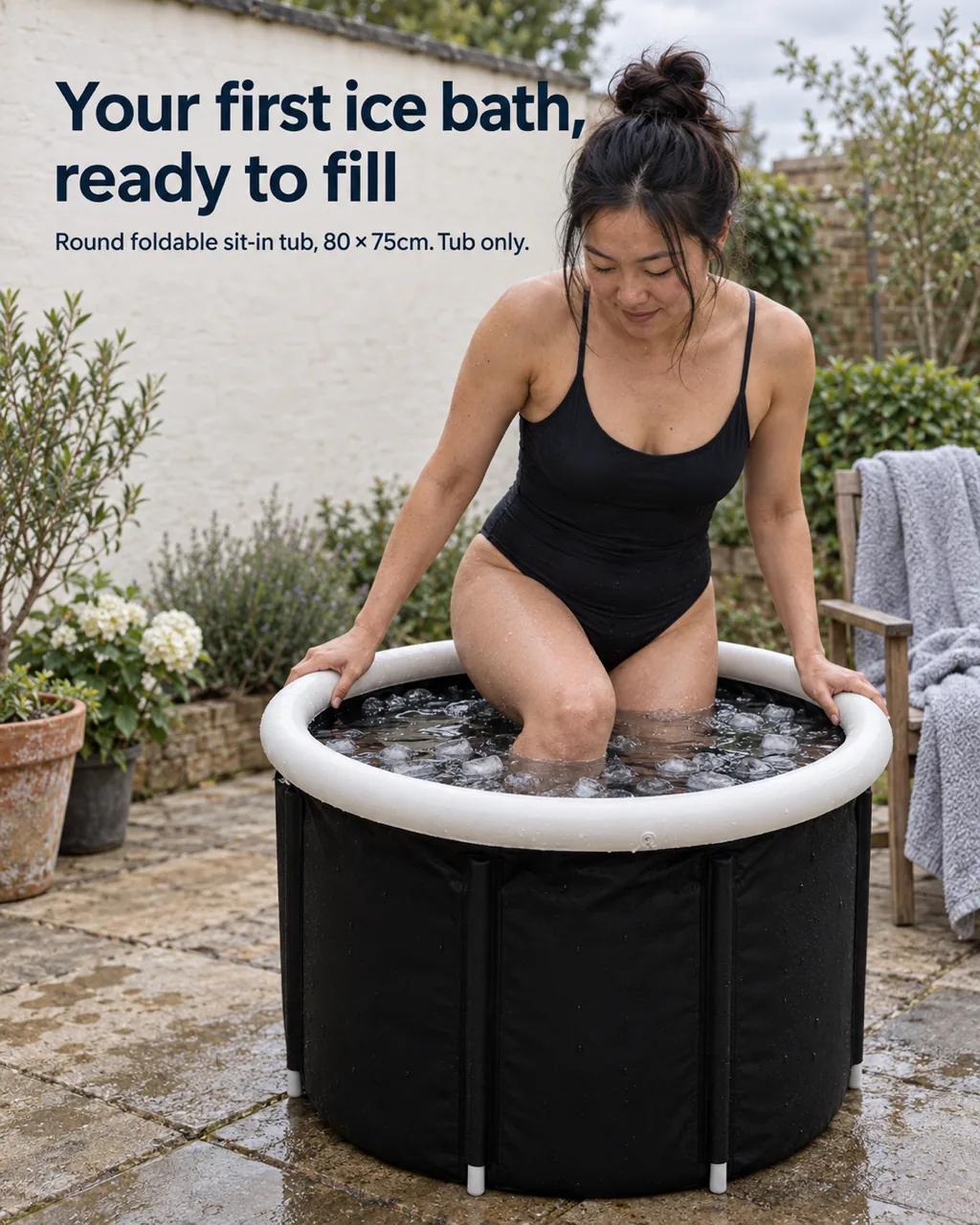
The two numbers on a round sit-in tub are diameter and height. Our Plunge 320 is 83cm across and 73cm tall according to the supplier. The Plunge 80 is 80 × 75cm. To check the diameter, sit on a kitchen chair, pull your knees up towards your chest the way you would in the tub, and have someone measure from the back of your hips to your kneecaps. If that measurement fits inside the tub's diameter with a few centimetres spare, you'll fit, and 80cm round tubs are common because that's true for most adults.
Height decides how deep the water is on you. Sitting on the base of a 73cm tall tub with water a hand's width from the rim, most people find the surface somewhere around the shoulders. If you're tall, you sit lower and bend more. If you're short, you may want to sit on the inflatable seat cushion that comes with the Plunge 320 to bring your shoulders up.
Then there's capacity, in litres, and this is the number that catches people out. The Plunge 320 holds more than 380 litres according to its supplier. One litre of water has a mass of almost exactly one kilogram (Wikipedia, litre), so a full Plunge 320 is pushing 400kg before you climb in. That is fine on a patio, a garage floor or a ground-floor bathroom. On a timber balcony or an upstairs room it's a question for whoever built the floor, not for us.
Our will a Plunge 320 fit my space page walks through the footprint, access and drainage questions for specific homes.
You'll see four main constructions in the UK market. Here's what each one is, at a factual level, with the trade-offs as we understand them.
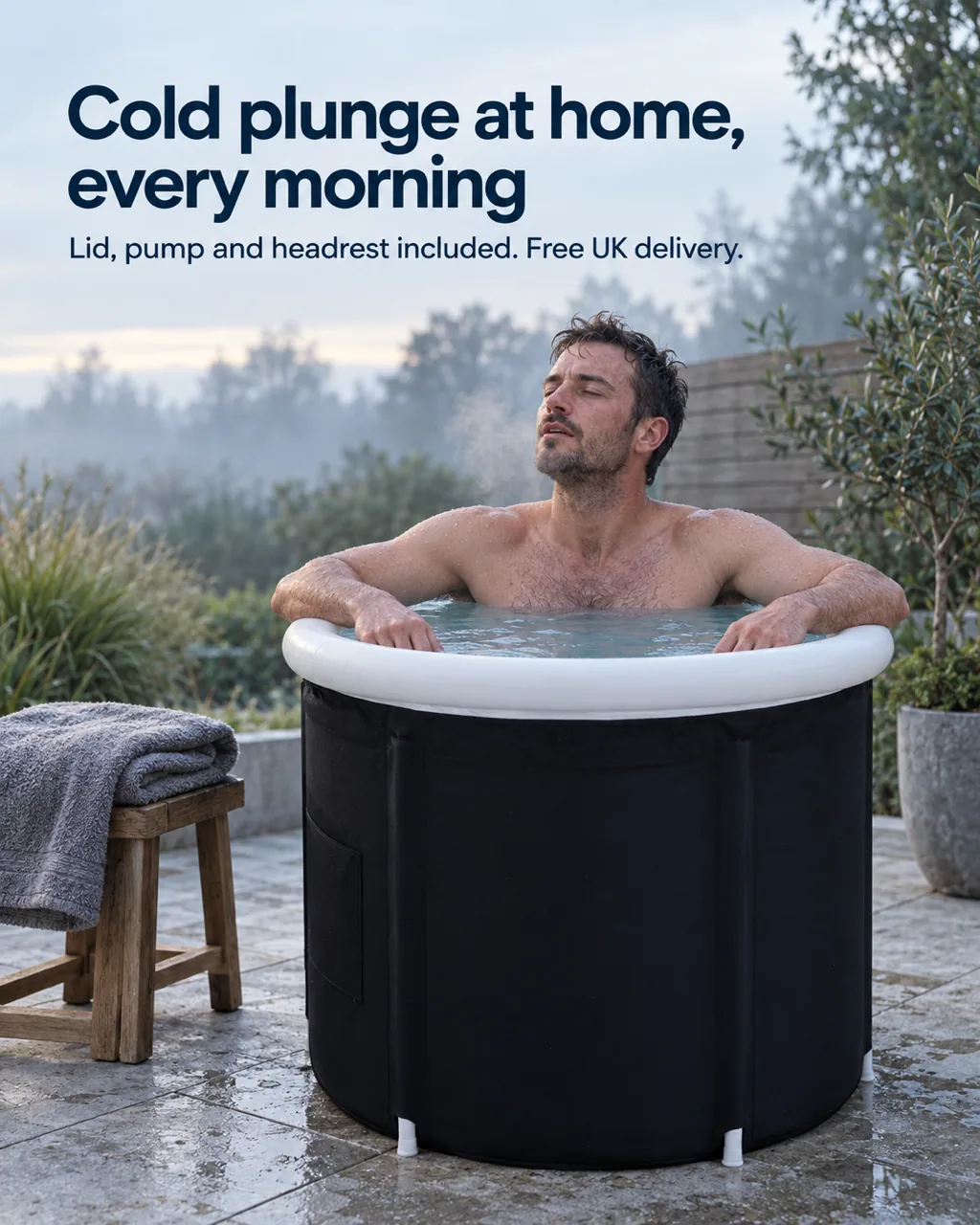
This is what we sell. A multi-layer fabric wall, often with an insulating layer sandwiched between a waterproof inner and a tougher outer, held in shape by rigid support poles or legs and topped with an inflatable ring. The Plunge 320's walls are triple-layer insulated fabric, and the supplier's description says that helps the water hold its temperature for longer. Six support legs hold the shape and the inflatable ring forms the rim and doubles as a headrest.
Pros: light, folds flat, goes through any door, cheapest per litre of anything with insulation. Cons: the walls flex when you lean on them, the ring needs a hand pump, and fabric will eventually wear at the seams where a steel tub wouldn't. For a first tub, or for anyone renting, it's hard to argue against.
An air-filled wall, like a paddling pool with taller sides. These are the cheapest tubs going and they pack down smallest. The downside is that air is what's holding the water back: a puncture is a wet garden, the walls give more than fabric-and-pole tubs, and there is usually no insulation layer at all, so the water warms faster in summer and freezes at the edges faster in winter. We don't sell one. Our inflatable vs foldable guide goes through the differences in detail if you're weighing that up.
A rigid, often oval or rectangular, steel tub. Steel is durable, easy to clean, and looks the part in a home gym. It also conducts heat well, which means an uninsulated steel tub loses cold to the air quickly, so most good ones have an insulated jacket. They're heavy, they don't fold, and they usually arrive on a pallet rather than through the letterbox. We haven't priced steel tubs today, so we won't quote a figure, but they sit well above anything in this article.
Cedar and similar barrels. Beautiful, a real garden feature, and wood insulates reasonably well on its own. They need looking after: the timber wants to stay damp enough not to shrink and let the staves gap, and it needs treating. They're also heavy, permanent once filled, and the most expensive of the four. If you're building an outdoor spa area and money isn't the constraint, a wooden tub is a joy. If you're testing whether you'll still be plunging in March, it's a lot of oak to sell on.
This is where cheap tubs differ most, and it's why "the tub was £X" comparisons often mislead. Read the included-items line before the price.
The Plunge 320 at £109 is our complete tub. In the box: the tub, an all-weather elasticated lid, six support legs, an inflatable seat cushion, a hand pump, a drain hose, a seal ring and the manual. Everything you need to fill it, sit in it, drain it and cover it between sessions is there. The lid is a debris cover, not a filter or a water treatment system, and we say that on the product page too.
The Plunge 80 at £69 is the essential tub: just the tub, no lid or accessories. That's how it stays at our lowest price. The supplier's photo shows a lid, but the listing doesn't confirm one, so we don't promise it. If you want a lid, a headrest ring, a cushion and a pump, that's the Plunge 320 and the £40 difference buys exactly those things.
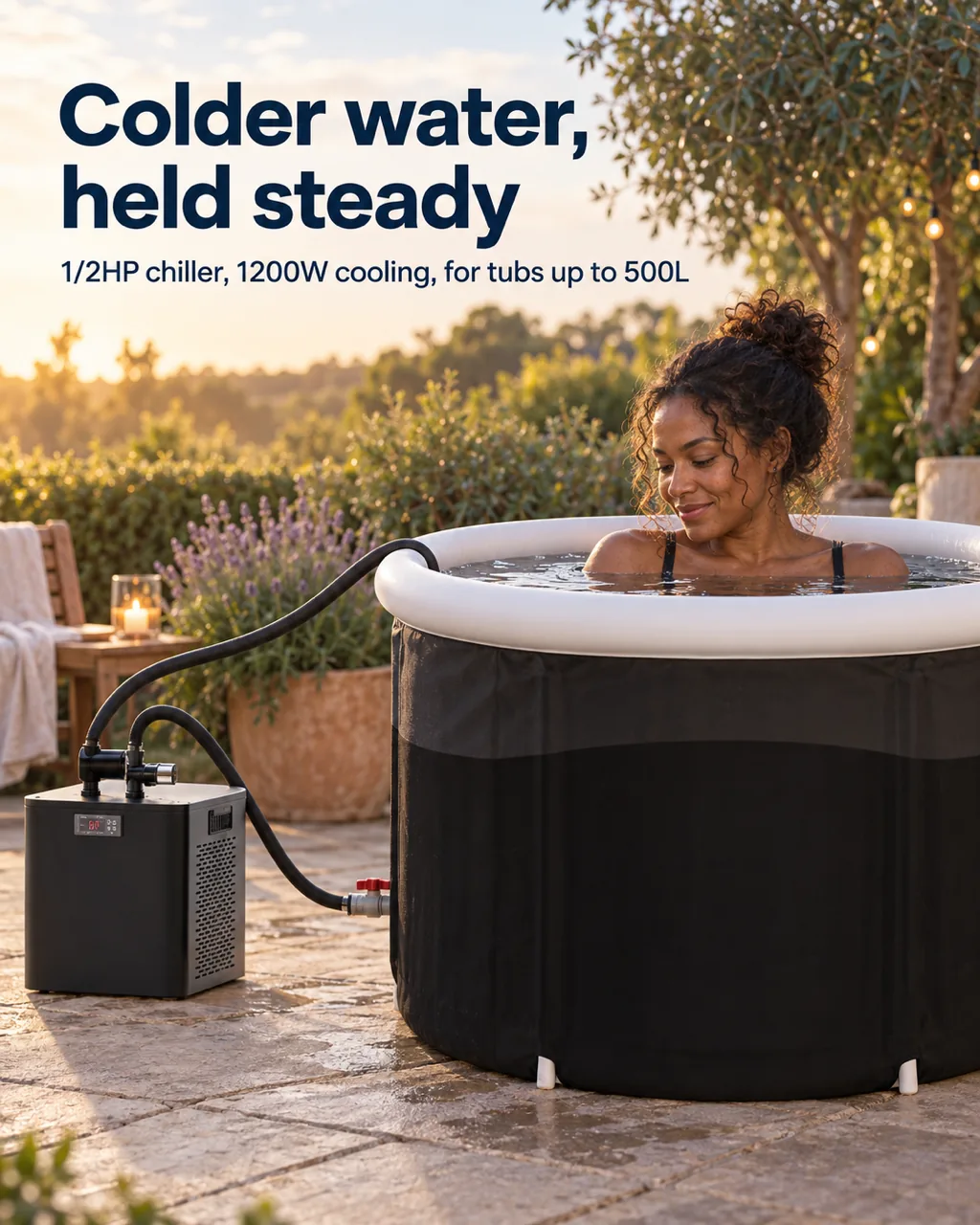
Neither includes a chiller. A chiller is a separate refrigeration unit, sold separately, and the Plunge 320 needs one rated above its 380-plus litres if you go that way: the Chill Core 500 is rated for up to 500 litres. Ice works too, and is the cheapest way to start.
We can only quote our own prices with confidence, so here they are, and then a fair description of what sits above.
Under £75. The Plunge 80 at £69. A round 80 × 75cm foldable sit-in tub on its own. Fill it, add ice, get in. No lid, so between sessions you're improvising a cover or draining it. Orders under £100 carry a flat £4.95 delivery fee, shown at checkout.
£75 to £150. The Plunge 320 at £109. Same category of tub, slightly wider, with triple-layer insulated walls and the full accessory set including the lid. Free tracked delivery because it clears the £100 threshold. This is the band we'd point almost everyone to for a first tub.
Several hundred pounds and up. Steel and wooden tubs, and fabric tubs from brands with bigger marketing budgets. You're paying for rigidity, looks, longevity and sometimes built-in filtration. We haven't checked those prices today so we won't put numbers on them; our best ice bath UK comparison has the ones we checked, with the dates we checked them.
Then the chiller, if you want one, which starts at £599 for our Chill Core 300 and is a bigger decision than the tub itself. Bundles bring the price down: the Performance Bundle pairs the Plunge 320 with the Chill Core 500 and a thermometer for £899, which is £38 less than buying the three separately at £937.
Almost every tub under £150 is round and you sit in it upright with your knees up. Long tubs, where you lie down with your legs out, are mostly steel or wood and start much higher.
Round has real advantages beyond price. Less water for the same depth on your body, which means less ice or less chiller work. A smaller footprint: the Plunge 320 is 83cm across, so it sits in a corner a long tub never would. And it's a shape that fits in the corner of a patio or the end of a garage. The trade-off is that you can't stretch your legs out, and some people find the tucked position uncomfortable after ten minutes. If that's you, a long tub is worth the money. Try a round one first if you can; most people find the position fine once the cold has their attention.
Whatever tub you buy, the water does the same thing to you. The trials that Machado and colleagues pooled in their 2016 meta-analysis in Sports Medicine found the best soreness results at water between 10 and 15°C, for 10 to 15 minutes. Bleakley and colleagues' 2012 Cochrane review, covering 17 trials and 366 participants, found some evidence that cold water immersion reduces delayed onset muscle soreness compared with rest, and rated the study quality as low. Nobody in that research was plunging in 2°C water, and no tub material changes what 12°C water feels like.
Where material does matter is holding that temperature. Water takes 4,184 joules per kilogram to change by one degree (Wikipedia, specific heat capacity), so a 380-litre tub is a big thermal mass, and once it's cold it wants to stay cold. Insulation and a lid slow the warming. That's the honest case for the Plunge 320's triple-layer walls and included lid over a bare inflatable: not colder water, but colder water for longer, and less ice on Thursday because Tuesday's cold hasn't all leaked out.
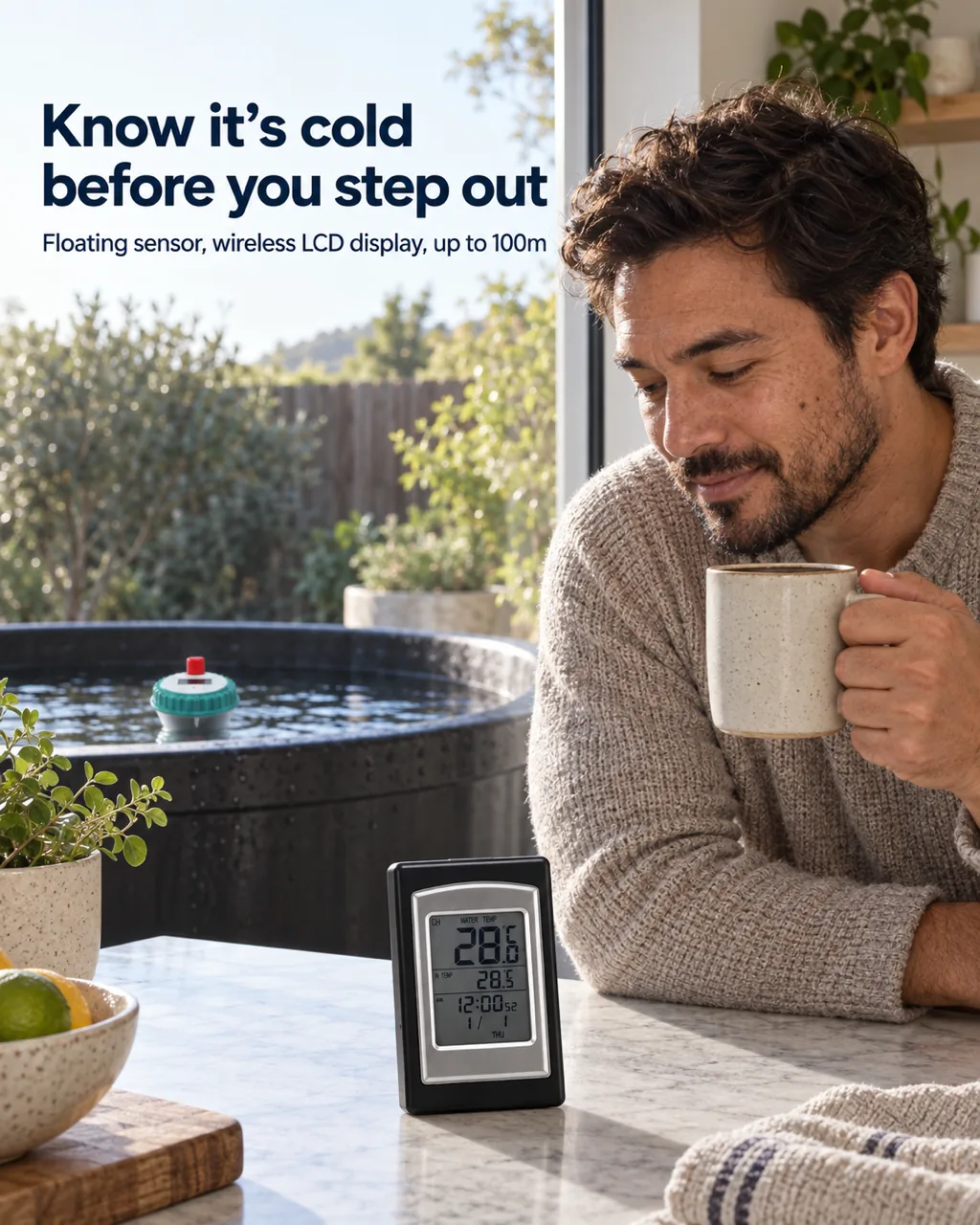
A thermometer tells you where you actually are. Our Wireless Floating Thermometer at £29 floats in the tub and sends the reading to a display indoors, so you know it's ready before you go out.
A few things a spec sheet won't tell you.
Fill it where it's going to live. You will not move a full tub. Choose a spot near an outside tap and think about where 380 litres go when you empty it: the drain hose that comes with the Plunge 320 wants to run downhill to a drain, a border that can take it, or a gully. A lawn takes a lot of water, but not that much at once.
Read the manual before assembly and put the legs in properly; the shape depends on them. Pump the top ring firm but not rock hard. Between sessions, put the lid on. When you stop for the season, drain it, dry it properly and fold it, and store it somewhere it won't be crushed. Fabric that's folded wet goes musty.
Water care is its own topic, especially if you keep the same water for more than a few days. Our water care and maintenance guide covers it, and the ice bath setup at home guide has the full first-day walkthrough.
If you want to lie flat, neither of our tubs is for you; they're sit-in, knees-up tubs and we'd rather say so than sell you one you'll resent. If you want a permanent, rigid garden feature, look at steel or wood and budget accordingly. If you're two metres tall and broad, 80cm across will feel snug; measure yourself in the chair before you order.
And if you're in an upstairs flat with no drain and a landlord who'd notice 400kg of water on the floor, honestly, start with cold showers. Our ice bath vs cold shower article is a fair look at what you give up.
Both tubs ship tracked, with delivery listed at 10 to 16 days. The Plunge 320 gets free delivery because it's over £100; the Plunge 80 carries the flat £4.95 fee. You'll get a tracking number by email when it ships.
Our supplier doesn't accept change-of-mind returns on the tubs, so we don't offer returns beyond your legal rights. Under UK distance-selling rules you can tell us you want to cancel within 14 days of receiving the item, then have another 14 days to return it, and a refund is due within 14 days of the item coming back (GOV.UK, accepting returns and giving refunds). Return postage is at your cost. Anything that arrives faulty or damaged, we replace or refund.
If you're new to this and want it to work first time: the Plunge 320 at £109. Lid, legs, cushion, pump, drain hose, all in one box, free delivery, and it's ready for a chiller later if you decide you want one.
If you want the cheapest possible way to find out whether you like cold water, and you're happy to sort your own cover: the Plunge 80 at £69.
Either way, fill it from the cold tap, put a bag of ice in, and give it ten minutes at 12°C before you decide anything about steel or cedar.
This article is for general information and does not constitute medical advice. Cold water immersion carries cardiovascular and hypothermia risk. Consult a doctor before starting, never plunge alone, and stop immediately if you feel unwell.
This article is for general information and does not constitute medical advice. Cold water immersion is not a medical treatment. Consult a professional if you have cardiovascular conditions.
For a sit-in plunge, the round tubs we sell are 83cm across and 73cm tall (Plunge 320) or 80 × 75cm (Plunge 80), both supplier figures. Sit on a kitchen chair, hug your knees and measure the width you take up. If that fits inside 80cm with a little spare, you'll fit. Taller people sit lower in the water; the Plunge 320 holds more than 380 litres so there is depth to spare.
It varies a lot. The Plunge 320 holds over 380 litres according to its supplier. Remember one litre of water weighs almost exactly one kilogram, so a full Plunge 320 is close to 400kg on your floor or decking, plus you.
For home use, yes, and it's what we sell. The trade-offs are honest ones: fabric flexes when you lean on it, the inflatable top ring needs pumping up, and it will never look like a cedar barrel. In return you get a tub that costs £69 to £109, folds for storage and can be carried through a normal door.
Ours differ. The Plunge 320 at £109 includes an all-weather elasticated lid. The Plunge 80 at £69 is the tub only, no lid or accessories. Always check the 'in the box' line of any listing, because lids are the thing most often left out.
Yes, if the floor can take the weight and you have somewhere to drain it. A bathroom or a garage with a floor drain is ideal. Both our tubs work indoors or out; a full tub is several hundred kilograms, so a first-floor flat needs some thought.
The trials Machado and colleagues (2016) pooled found the best results for soreness at water between 10 and 15°C, for 10 to 15 minutes. You do not need ice-water extremes. A UK cold tap plus a bag or two of ice gets a tub into that band for most of the year.
Setting up a home ice bath: the tub, a thermometer and optional chiller, where it goes indoors or out, and what an ice bath at home costs, with real prices.
The best ice bath in the UK depends on budget and how often you plunge. Seven tubs compared by category, with every price checked on the maker's own page.
Where to start, how fast to progress, and how to fit cold plunging around training without undoing your gains. A week-by-week plan grounded in the evidence.
Do you need an ice bath filter? What filters exist for home tubs, how often to change the water, and the sanitiser levels UK guidance uses, explained plainly.